
The Photos You’ll Never See From Cameras For Girls
Earlier today, I had a conversation that reminded me why we do this work the way we do.
Someone asked me:
“Why do you focus so much on documentary photography—and why does ethical storytelling matter so much to you?”
I get why they asked; it’s not something most people stop to think about. But it got me talking about the deeper purpose behind Cameras For Girls:
We don’t just teach photography. We teach young African women how to tell stories with care, with consent, and with power, so they can break into male-dominated media spaces and build meaningful careers.
And part of that means teaching what not to photograph—and why that matters.
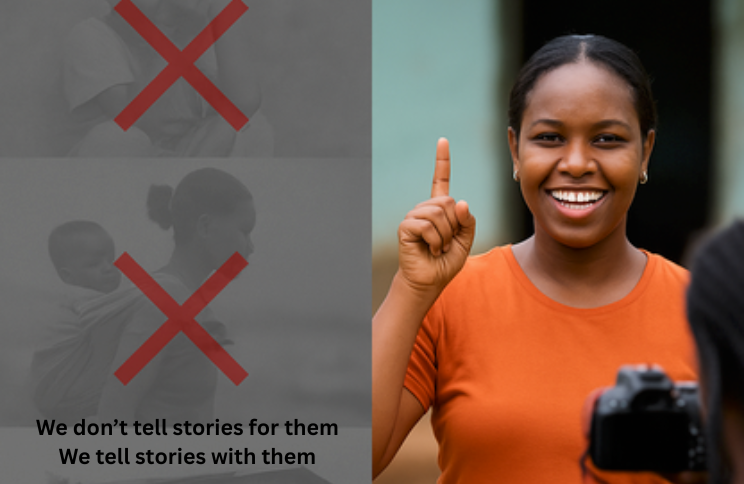
Poverty Is Not a Prop: What You Won't See
Let's start with what's often considered "normal" in the nonprofit and development world.
You won't find images from Cameras For Girls of:
Half-dressed children with hollow eyes.
Women standing in front of crumbling homes made to look helpless.
Close-ups of people in distress with no context or agency.
These images were once considered powerful fundraising tools. But today, we understand that they are not just harmful, they're dangerous.
They perpetuate a narrative rooted in colonialism: Africa as a place of suffering. Women as victims. Children as objects of charity. And viewers, usually in the Global North, as saviours.
We reject that narrative. Entirely.
The Silent Risks of "Innocent" Images
We live in a time where images are no longer static. They're data. They're currency. And they can be weaponized.
The moment an image of a child is uploaded online, it becomes searchable. Trackable. Scrapeable. AI can now locate a person's face across platforms, generate synthetic versions, and feed images into databases we'll never know exist.
In some cases, this can even lead to trafficking and other forms of exploitation.
It's not a fear tactic—it's a fact.
So when we say we don't photograph children without layers of permission and protection, we mean it.
We are not just protecting dignity, we are protecting lives.
What Is Ethical Storytelling?
Ethical storytelling is not just a nice idea or checkbox in our curriculum; it is a framework that shapes how our students engage with their subjects and their communities.
We teach our students to ask themselves these questions before they ever click the shutter:
Did I ask for consent in a language and method the subject fully understands?
Does this story belong to the subject, and am I telling it with their participation and input?
Am I showing the full complexity of the person, not just their moment of need or struggle?
Would I be proud to show this image to the subject's family or community?
It's not always easy, especially when our students are starting out on their journey of becoming ethical storytellers. Sometimes they get a NO, and sometimes it means not taking the photo. And that's a powerful choice.
Telling Stories With, Not About
The core of our work is about shifting the lens, literally and figuratively.
Our students are not trained to extract stories; they're taught to co-create them.
They don't capture people, they collaborate with them. We do the same with our students. We cannot teach them how to walk this path if we don't do the same.
That means:
Asking permission not just for the photo, but for how it will be used.
Sharing the final image with the subject, so they have a voice in how they're represented.
Documenting stories that show hope, resilience, creativity, and agency, not just hardship.
Why It Matters Now More Than Ever
AI, misinformation, and clickbait culture are not buzzwords. They are realities shaping how the world sees Africa and her people.
If we don't tell our stories, ethically, locally, and with nuance, someone else will, without our permission. They may not have the same care for the people in the frame.
That's why Cameras For Girls exists. To give young women the tools, training, and trust to document their communities responsibly, and to change the visual narrative that has too often failed them.
A camera in the right hands can challenge systems, spark conversations, and bring dignity back into the frame.
What You Will See from Cameras For Girls
So what will you see from Cameras For Girls?
You’ll see girls behind the lens—owning their voices, telling real stories, and stepping into spaces they were once shut out of.
You’ll see photography being used not just to document life, but to shift narratives and open doors.
Because this work isn’t just about images.
It’s about gender equality.
It’s about avoiding exploitative narratives.
And it’s about equipping young women with the tools and skills to build dignified, sustainable careers in media, and break the cycle of poverty for themselves and their communities.
And that’s why the photos you’ll never see matter just as much as the ones you do.
If you believe in the power of ethical storytelling and in seeing more girls behind the lens, shaping their own narratives, please consider supporting Cameras For Girls.
Your support helps us put cameras, skills, and opportunities into the hands of young women who are ready to change the story.