
The Work Behind a Cameras For Girls Workshop
Each year, as we prepare to run our training workshops in Uganda and Tanzania, we are asked the same question:
“What does it actually take to run one of these workshops?”
The question may sound simple, but the answer is anything but. It is not just about showing up with cameras and running a few sessions. The real work begins months before we ever meet our students.
Workshops are only one part of the year-long journey. The work behind a Cameras For Girls workshop is a year of planning, trust building, collaboration, and careful thought.
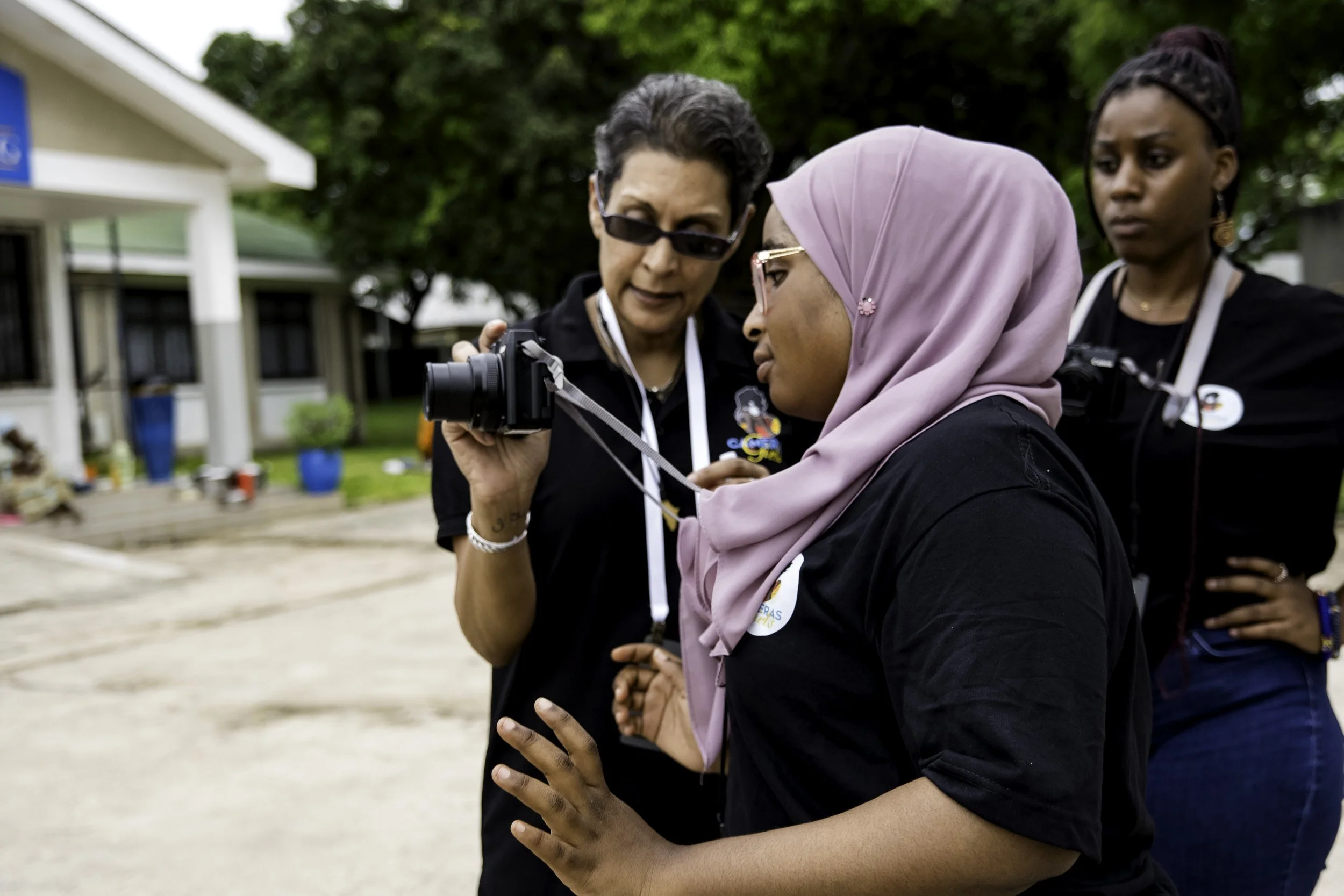
Amina showing Aisha how to set up her camera during the Tanzania workshop, November 2023
Building Before We Teach
The first step is not logistics. It is listening. Our process always starts with relationships.
We work with local partners and universities who understand the communities we aim to walk alongside. Together, we identify young women who are ready to grow, eager to learn, and facing real barriers to accessing paid work in media and communications. This is done through a comprehensive 40-question application to ensure that the girls who apply for our program are fully committed to doing what it takes to succeed, not just for the gift of a camera.
Our sustainability model centres on deep partnerships and year-long support. We invest in training students not just as photographers, but as professionals with the skills to earn a living. By working closely with local universities and NGOs, we create a cycle of growth that can be sustained within communities.
Before any teaching happens, we prepare. We find the right venue. We secure meals, transport, and internet access for our students. We ethically source cameras and navigate customs regulations that shift without notice. We coordinate with trainers, mentors, and advisors to align our curriculum with the realities our students live with.
This is not a copy-paste model. Each workshop is designed with care for the specific needs of the community and the students involved. What works in Uganda does not work in Tanzania, because although they are neighbouring countries, their cultures are very different.
Designing for Safety, Not Just Skill
We are not only teaching technical skills. We are creating space for INpowerment. If you know me by now, you know I abhor the word “empowerment” because of its colonial heritage.
We design every workshop to support emotional and psychological safety. Many of our students are entering fields where they are not always welcomed. In some cases, they have already been made to feel invisible or incapable.
We honour their lived experience. Our sessions include space to speak, to reflect, and to grow together. We teach ethical storytelling rooted in consent and respect. We challenge harmful narratives and practices while helping students learn how to navigate the professional world with confidence and care.
Our approach is relational. We know that growth does not happen in isolation.
A Year of Support, Not a One-Time Event
When students walk into the workshop, they are greeted with a camera, and for most of them, it is their first time holding one. This camera is theirs to keep, but it is only the beginning.
Each in-person workshop spans four days and includes:
Meals, transport, and data support
A foundational course in photography and ethical storytelling
A field assignment with a local NGO to begin building a portfolio
A hour led by a psychiatrist or mental health specialist to discuss the pervasive issue of
sexual harassment and protecting their mental health.
From there, the program continues for a full year with:
Weekly online learning on Zoom
Access to a custom video training platform, otherwise known as our Online Learning Hub.
Editing tools and instruction in Photoshop and Lightroom
Portfolio development and storytelling assignments
Resume building, LinkedIn development, and career coaching
Six months of mentorship with media professionals
Our goal is not to produce hobbyists. We are supporting students to pursue real, paid work in photography, journalism, communications, and related fields.
More than 80% of our students in Uganda and Tanzania have gone on to secure paid work or generate income in media fields. That is not by chance. It is the result of deep preparation, student-led learning, and sustained support.
What’s Next in 2026
In 2026, we are growing. We will bring our full-year program to Kenya. After years of success in Uganda and Tanzania, this is a natural step forward.
We have heard from young women in Kenya who are eager to learn but face many of the same systemic challenges as our other students. We will meet them with the same care and commitment we bring to every new location: strong partnerships, cultural awareness, and a long-term vision for impact.
We are also introducing drone photography training through a new collaboration with Tanzania Flying Labs, happening in January 2026, in partnership with the University of Dar es Salaam’s Journalism and Advertising School of Studies.
This work is especially exciting. Drone journalism and visual storytelling offer new ways to document environmental change, public health issues, and untold stories. But access to drone training remains limited, especially for women.
We will test, we will listen, and we will learn if this is the right way forward.
Together with Flying Labs, we will train women to fly, document, and share powerful visual narratives from the sky. We will support them in accessing drone technology and building the confidence to use it professionally.
Why This Work Matters
Women make up the majority of photography graduates worldwide, but remain a small fraction of working professionals. Across Africa, cultural expectations, financial limitations, and systemic exclusion make it even harder for women to enter and stay in media and communications.
Cameras For Girls exists to change this reality.
We do not position ourselves as saviours or outsiders. We are part of a global shift toward fairness, visibility, and INpowerment. We work with young women who already have stories to tell. What they need is access, space, and support.
The Ripple Effect
When a Cameras For Girls student begins to share her voice through photography and storytelling, the impact extends far beyond her.
Families begin to see new futures. Communities begin to shift. Organizations gain access to ethical, local storytelling. And young women start to see themselves not just as learners, but as professionals.
This is why we do the work we do. Not because it is easy - but because it is necessary.
Every part of our program — from buying cameras to providing meals, transport, internet access, and year-long training — is made possible through donor support. We prioritize student support and program delivery, keeping administrative costs low. Your contribution helps ensure that women who have long been excluded from media and communications have real access to training and paid work.