
What Is at Stake When Women Don’t Get Paid Their Worth?
This week, I gathered our Cameras For Girls students across Africa on Zoom. Many of them are just beginning to step into the workforce, taking on photography gigs, journalism assignments, communications roles, or managing social media for clients.
The training focused on something rarely taught in school: how to price themselves fairly. We broke down the real cost of their work, which includes time spent shooting, hours of editing, wear and tear on gear (amortized over years), travel, and meals.
Why does this matter? Because accepting jobs “for the experience” without pay doesn’t just hurt one woman. It sends a dangerous signal to the entire industry that women’s labour is negotiable, or worse, that it’s free.
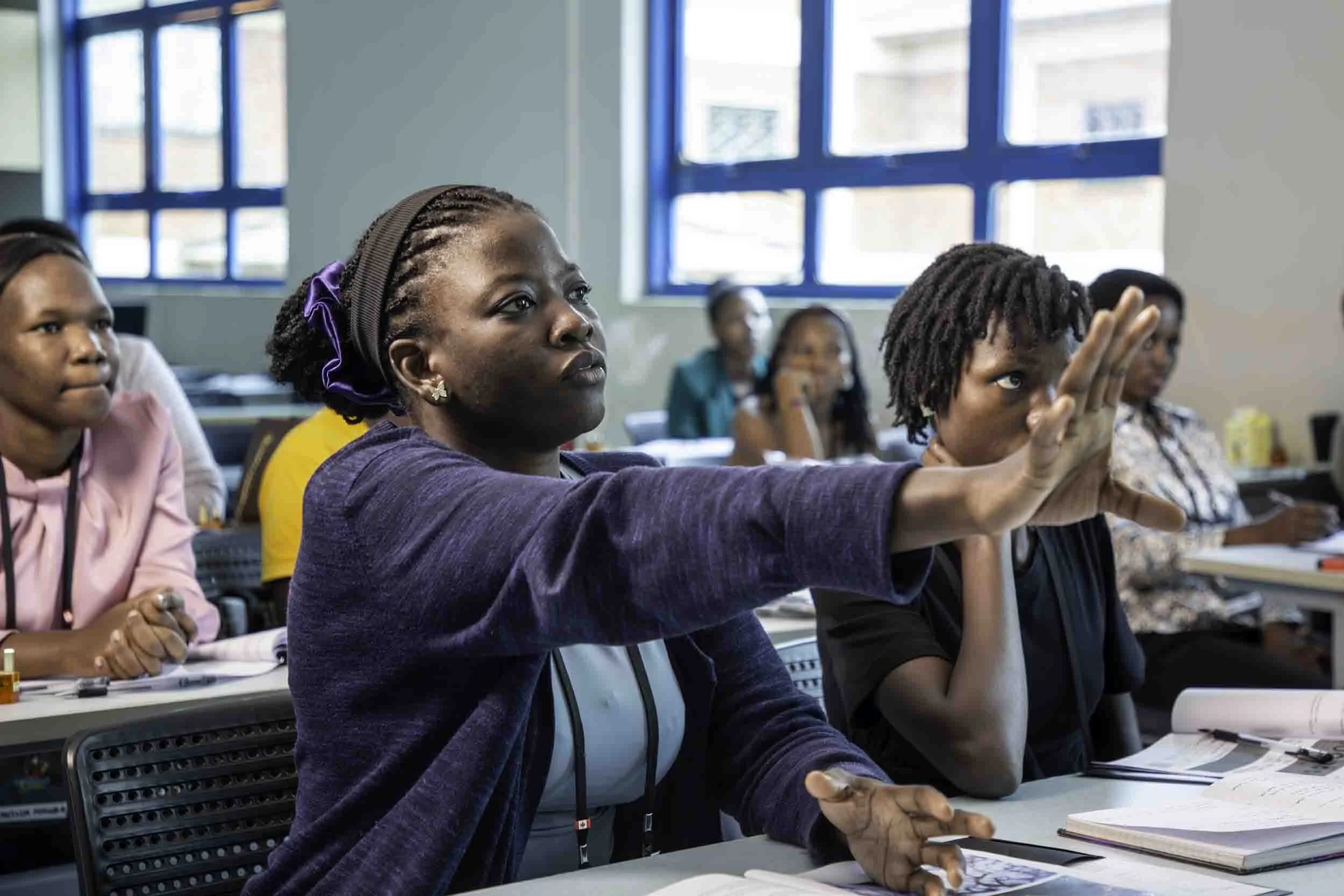
Discussion during the 2025 training in Uganda, March 2025
Stories From the Frontlines
During the session, several of our students bravely shared what they’ve been facing.
One young woman asked: “What do you say when someone tells you, ‘but it’s for the children’ or ‘this will give you blessings if you do the work’?”
Another explained that her boss recently promoted her, not with a salary increase, but with more responsibilities. Because she now owns a camera through our program, he “assumed” she would be grateful to start teaching young girls in their organization. The gratitude he expected had nothing to do with paying her for her labour; it was exploitation wrapped in the language of opportunity. We discussed how they should both advocate for fair compensation for their time and experience.
These stories cut to the heart of why we hold trainings like this. Too often, women are manipulated into giving away their skills under the guise of service, sacrifice, or “exposure.”
The Pay Gap Is Global, and Local
The numbers confirm what our students feel. Globally, women earn about 20% less than men for the same work (UN Women, 2023). In Africa, the gap can be even wider; women are offered low-paying, insecure roles, and 65% are in “vulnerable employment,” often unpaid or underpaid.
In media and journalism, the disparities are stark. According to UNESCO, women make up less than 30% of media employees worldwide, and even fewer hold leadership positions. For those who do get in the door, unequal pay and expectations of unpaid “experience” work reinforce barriers to advancement.
For our students, who are young women fighting to break into male-dominated fields, this means starting their careers from a disadvantaged position. If they accept unpaid roles or undercut themselves, they not only lose income today, but they also set a precedent that diminishes their long-term worth in the eyes of employers.
My Own Story: The Day Everything Changed
I know this reality all too well. Early in my media career, I spent six weeks working on a film - for free. My commute was a three-hour round trip, and my days stretched 18 to 21 hours long.
One night, after yet another exhausting shift, I nearly died falling asleep at the wheel. The next day, I approached the producer and stated that I would no longer continue unless I was also put up in the hotel with the rest of the crew.
His answer stunned me: “You only had to ask, Amina.”
That moment changed me forever. I realized that if I didn’t advocate for myself, no one else would. It was the beginning of my journey to valuing my own labour and demanding fair treatment.
In that moment, I understood the actual danger of the expectation of unpaid work. It nearly cost me my life.
Volunteering vs. Exploitation
Let me be clear: I am not saying women should never volunteer or intern. When you’re just starting, internships and short-term volunteer experiences can provide valuable learning opportunities and connections.
But anything beyond six months without pay is exploitation. Period.
Unpaid labour, disguised as “opportunity,” erodes self-worth, undermines career progress, and reinforces systemic inequalities.
What We Teach at Cameras For Girls
That’s why, at Cameras For Girls, we don’t just teach photography, ethical storytelling, and business skills. We also teach our students to:
Calculate their actual costs and set fair prices. If it is a photography job, that includes their gear, their labour, their time to travel, and the time it takes to edit the photos.
Advocate for their rights and dignity.
Say no to unsafe or exploitative conditions.
Stand firm against harassment and discrimination.
Recognize their worth, and demand it.
Because if they don’t, the cycle of undervaluing women continues.
The Real Cost of Unpaid Work
Here’s the ripple effect when women accept unpaid work:
Personally, they cannot cover basic costs, replace or maintain equipment, or build savings.
Professionally, employers and clients come to expect “cheap” or free labour from women.
Systemically, it reinforces the perception that women’s contributions are secondary or expendable.
Standing up for their rights isn’t just about money. It’s about dignity, safety, and equality.
The Bigger Picture—and Your Role in It
When women are paid fairly, everyone benefits. Families have more stability. Communities thrive. Industries gain new perspectives and diverse leadership.
But when women accept less than they deserve, or worse, nothing at all, we all lose.
That’s why we launched our Job Creation Program at Cameras For Girls: to ensure that women not only acquire skills but also transition into paid opportunities where their contributions are valued.
When you support Cameras For Girls, you’re not just funding photography workshops. You’re helping young women:
Stand up for fair pay.
Advocate for their dignity and safety.
Break cycles of poverty and inequality.
Create careers and futures that are sustainable and respected.
Together, we can bridge the gap and ensure that women everywhere are paid their worth.