
From Camera to Career: 3 Students Find Paid Work Through Cameras For Girls
At Cameras For Girls, we have always believed that talent is not the problem. Access is.
So many of the young women we work with already have the drive, intelligence, and desire to build careers in journalism, communications, photography, and media. What they often lack is a camera of their own, practical experience, or the confidence that comes from being supported while they learn.
That is where our year-long program makes the difference.
We do not simply hand a student a camera and wish her well. We work with her as she learns how to use that camera with purpose, tell stories ethically, build her confidence, and prepare for paid work. In media spaces where women are often expected to prove themselves before they are even given a chance, that support matters.
And that support is working.
Only weeks after completing our year-long program, some of our students are already stepping into paid opportunities. They are finding full-time jobs, part-time contracts, and photography assignments that allow them to use their skills and earn income.
Phiona, Rehema, and Sheilla Clara are three recent examples of what happens when young women are given the tools, training, and mentorship to move from camera to career.
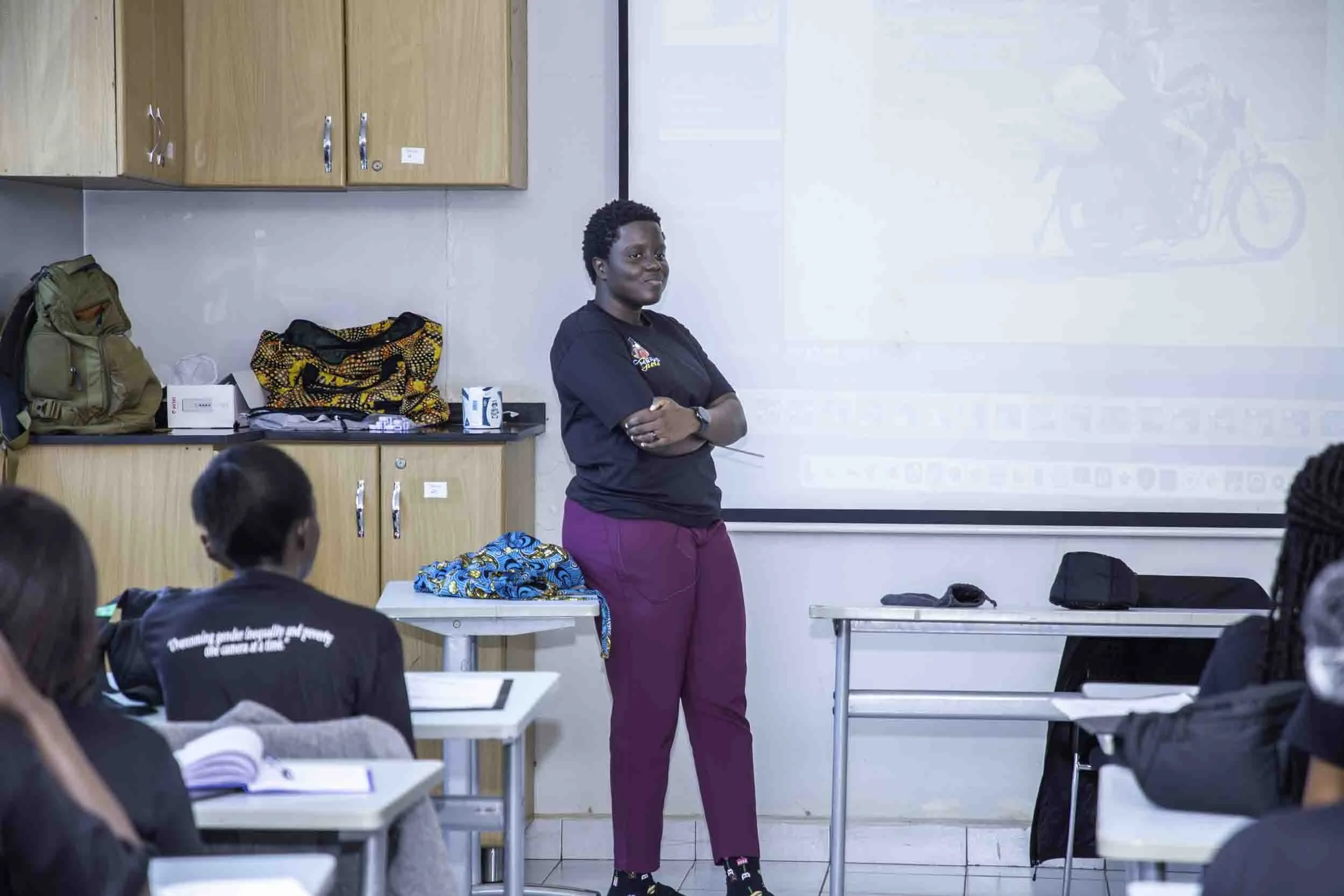
Sheilla Clara teaching the 5th cohort in Uganda, during the 4-day workshop, March 2025
Phiona: From Training to a Full-Time Communications Job
Only a few weeks after finishing our year-long program, Phiona landed a full-time job in communications.
For her, the photography and ethical storytelling experience she gained through Cameras For Girls made a real difference. It helped her stand out because she could show more than an interest in the field. She had practical skills, hands-on experience, and a clear understanding of how to tell stories with care and intention.
Today, organizations need people who can do more than write. They need people who understand visuals, messaging, digital content, and storytelling. Phiona was able to bring those skills into her new role and show that she was ready to contribute.
Her story is exactly why our program exists. With the right support, a young woman can move quickly from learning into paid work.
Rehema: Documenting A School Opening
Rehema also found paid work after completing the program. She recently graduated in March and had been applying to different opportunities with her portfolio, but nothing was materializing.
That changed when we were contacted by Caroline Fuller, who works with an organization in Uganda that has built and is now operating two schools about 45 minutes outside of Kampala. They were looking for a storytelling partner, and these are the kinds of partnerships we love because they open more doors for our students to use their photography and ethical storytelling skills in the field.
We matched Rehema with Caroline, and she is now working with the team on the ground to help deliver the stories they want to portray.
This is a strong example of a participatory model. Rehema enters the space with an open heart and open mind, while also growing her portfolio, getting paid for her work, and learning how to respond to a client’s needs in real time.
Not every student will work in a newsroom. Some will support schools, nonprofits, small businesses, entrepreneurs, and community organizations that need strong visual content and authentic storytelling.
For Rehema, this opportunity gives her paid experience in photography, ethical storytelling, client communication, and fieldwork. For the organization, it brings in a trained storyteller who can help share its work with dignity, care, and purpose.
Sheilla Clara: Bringing a Creative Eye to Product Photography
Sheilla Clara, one of our trainers, recently secured paid photography work with a Chinese company in Uganda launching school bags.
The company wanted to attract parents and needed strong photos that would make the bags stand out in the market. They were not simply looking for someone to take basic product shots. They needed someone with a unique eye who could help present the bags in a way that felt useful, appealing, and connected to the people buying them.
Sheilla Clara was a natural fit. We put her forward for the opportunity, and she is now working with the company as they collaborate on ideas for the shoot and the product's overall presentation.
Her story shows another side of what photography can make possible. The skills our students learn can support journalism, communications, social media, small business marketing, product launches, and brand storytelling.
Sheilla Clara’s success is also powerful because she is not only finding paid work herself. As one of our trainers, she is helping other young women see what is possible too.
Why These Stories Matter
Phiona, Madrine, and Sheilla Clara each found different kinds of work.
One moved into full-time communications. One is helping a local business tell its story. One is using photography to support a product launch.
But all three stories point to the same truth: when young women have access to cameras, training, mentorship, and real support, they can turn their skills into income.
This is the premise behind Cameras For Girls.
Our year-long program continues to deliver on our goal of having 80% or more of our students working in media or media-related roles. These are not just numbers. They are young women gaining confidence, building careers, earning money, and telling stories from within their own communities.
That is the impact donors and funders make possible.
Help the Next Student Move From Camera to Career
The next Cameras For Girls success story is already waiting.
She may be a journalism student who cannot get published because she does not own a camera. She may be a communications graduate trying to enter a male-dominated media space. She may be a young woman with talent and ambition, but without the tools or support to turn that potential into paid work.
Your support can change that.
When you sponsor a student, support our year-long program, or invest in Cameras For Girls, you help provide more than a camera. You help provide training, mentorship, ethical storytelling skills, business knowledge, and a pathway to paid work.
You help a young woman move from camera to career.