
The 13 Words I Say to Every Cameras For Girls Student
On the first day of every Cameras For Girls 4-day workshop, before we dive into cameras, composition, storytelling, ethics, or career goals, I say the same 13 words to every student:
“I will not work harder than you have to for your own success.”
When I say these words, I am clear about my expectations: success in this program requires active participation. From day one, every young woman must understand that Cameras For Girls is not something being done to her or for her; she must own her journey through our year-long program.
Cameras For Girls opens doors, provides tools, and removes barriers that many young women face. We offer cameras, training, mentorship, and support, but we cannot provide success without their investment. Ultimately, it is up to each student to build her own future.
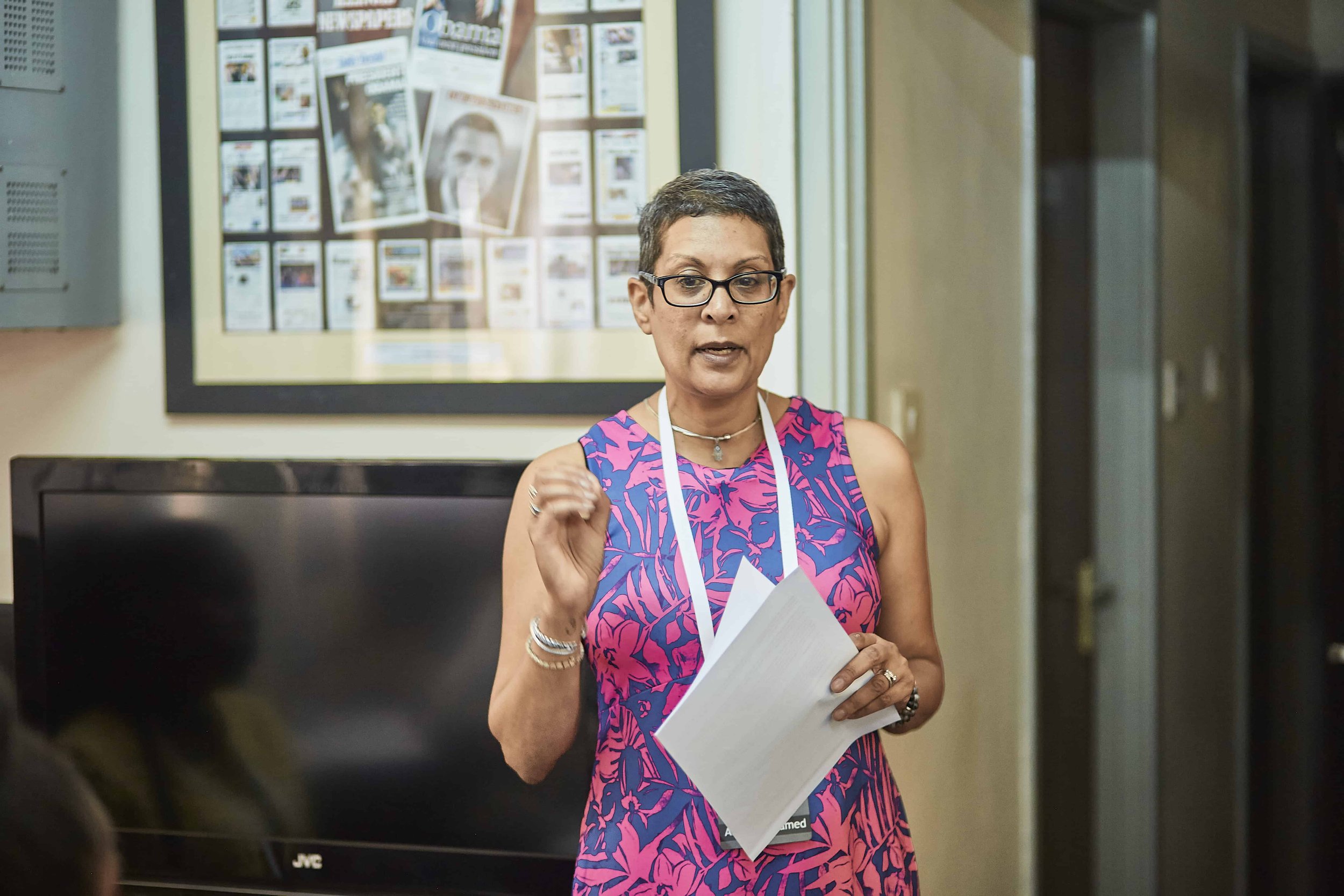
Amina during the 2022 workshop in Uganda, explaining what the Cameras For Girls is about.
We Are Not Here to Give Her The Fish
The core idea at Cameras For Girls is this: we build long-term skills, not dependency. Our students must leave with something that cannot be taken from them: the ability to create their own success.
One of the biggest investments we make for each girl is a camera. For many, this removes one of the biggest barriers to entering photography and journalism. Equipment is expensive, and without access to a camera, talent often remains unseen. But the camera is only the beginning. A camera, on its own, does not make a photographer. It does not teach someone how to frame a story with dignity, how to approach a subject with respect, how to build a portfolio, or how to pursue paid work.
That is where the learning begins. Our students must practice. They must make mistakes. They must complete monthly assignments, listen to feedback, ask questions, and keep going even when the work feels difficult. We can teach them how to use the tool, but they must decide what they will do with it.
Why Accountability Matters
The young women who enter our program are not lacking ability, intelligence, creativity, or ambition. What many have lacked is access: access to equipment, professional training, networks, mentors, and media spaces where women are recognized as capable professionals. They have also often been denied the confidence that comes from being seen, encouraged, and taken seriously. For too long, many have been told, directly or indirectly, that they do not belong in these spaces, or that their futures should be defined only through the lens of early marriage and domestic expectation.
These barriers are real, and I never want to minimize them. Photography, journalism, and media across many parts of Africa remain male-dominated spaces. Young women often have to work harder to be taken seriously. They may be questioned when they show up with a camera, face cultural expectations that tell them their place is elsewhere, or carry family responsibilities that compete with their professional dreams.
Recently, during a photo walk in Uganda, I was approached by a man who asked why women were holding cameras. I had no answer for him, not because I lacked one, but because some beliefs are so deeply entrenched that arguing in the moment would not change them. But that moment stayed with me because it reminded me exactly why this work matters, if we are going to shift the discussion around gender equity in media.
Our students are not only learning how to use a camera. They are learning how to stand in spaces where people may question their presence and continue working anyway. They are learning that their right to tell stories does not need to be explained or defended to everyone who doubts them.
Our students need skills, consistency, and self-advocacy, not just encouragement, to take their places in these fields. That kind of growth cannot be handed over in a certificate at the end of a workshop. It is built through practicing their photography, being disciplined in their participation, and completing their monthly assignments, which leads to a powerful portfolio at the end of the program and more opportunities for paid work, which is the ultimate goal.
INpowerment Is Not Passive
At Cameras For Girls, we use the word INpowerment. It replaces the colonial word 'empower' or 'empowerment'. We do not believe power is something we give to our students, as though they arrive empty and we fill them up. Their power is already there. Their voice is already there. Their vision is already there. Our role is to help them recognize it, strengthen it, and use it with purpose.
INpowerment takes effort. Our students must engage, practise, pursue feedback, and continually build their skills. Transformation comes from their commitment, not passivity.
That is why those 13 words matter so much. They are not a rejection of support. They are an invitation into ownership. For those willing to walk through the program, we see a confident woman emerge, ready to put her skills to the test in paid roles that open up to her. The more work she does, the more confidence she builds. It’s a positive ripple effect that shows others what is possible when they do the hard work. We have seen proof of this: 80% of our students who successfully complete the year-long program get paid work.
Why I Refuse to Work Harder Than They Do
As the founder and executive director of Cameras For Girls, I carry this work deeply. I believe in our students, their futures, and their right to tell stories, earn income, build careers, and step into rooms where women like them have too often been excluded.
I also know belief alone is not enough. When we care about someone’s success, it can be tempting to over-function. We want to remind them, chase them, soften every deadline, excuse every absence, and carry the weight when they do not. And to be clear, I do chase my students because I care. I check in. I remind them. I encourage them when they fall behind. I know life happens, and I know that for many of our students, the path is not always straightforward.
But I also have a limit. I will follow up three times. After that, I have to step back and let them take responsibility for their own choices. Not because I stop caring, but because accountability is part of the learning. Some students feel the weight of that responsibility, learn the lesson, and get back in line. Others fall too far behind to catch up, and as painful as that is, I cannot carry the burden for them.
When that happens, students are required to return their camera kit because the equipment must go to someone who is ready to use it fully. But they are not removed from the program. They are still encouraged to keep learning through our online learning hub and Friday sessions, where they can continue building their skills, ask questions, and stay connected to the community.
Many gratefully accept that opportunity, and that makes me proud of what we have built and how we continue to stay engaged in the lives of these women. It tells me they understand the lesson was never about punishment. It was about responsibility.
Building Careers, Not Dependency
From the beginning, our goal has been to help young women develop practical, professional skills they can use in the real world. Photography is part of that, but it is not the whole picture. We teach ethical storytelling because how a story is told matters. We teach digital marketing because visibility matters. We teach editing because quality matters. We teach business and job readiness because talent alone does not always lead to income.
We want our students to leave with more than beautiful images. We want them to leave with the ability to think critically, pitch themselves, build portfolios, seek paid work, and navigate professional spaces with confidence. A career is not built by passion alone. It is built through practice, professionalism, relationships, and consistency.
Every cohort brings students who take those words seriously. They may begin unsure of themselves, but slowly, something changes. They start to see differently. They begin to notice light, composition, emotion, and story. They become more confident in approaching people. They begin to understand that their perspective matters.
The core lesson is clear: success in Cameras For Girls relies on each student's active participation and ownership. Our program gives access, tools, and support, but real transformation comes from individual effort, accountability, and the decision to build a future. Those who embrace this leave not only with skills but with the confidence to pursue and achieve their professional goals. That is the lasting impact of our commitment to INpowerment.
This is the part of the work that is most important to me, not because we handed them success, but because they chose to participate in their own becoming. They took the opportunity seriously. They met the training with effort. They allowed themselves to be challenged, and they rose.
The Lesson Behind the 13 Words
“I will not work harder than you have to for your own success.”
Those 13 words are not meant to discourage our students. They are meant to prepare them.
They are a reminder that opportunity and responsibility must go together. Being given access is powerful, but choosing what to do with that access is where transformation begins. A camera can open a door, but it cannot walk through it. A mentor can offer guidance, but she cannot build a career. A program can create structure, but the student must bring the effort.
At Cameras For Girls, we will continue to create opportunities for young women across Africa to enter photography, journalism, and storytelling. We will continue to provide cameras, training, mentorship, and professional development. We will continue to challenge the gender barriers that keep women out of media spaces and support our students as they build their own paths forward.