
Reframing What It Means to Have a Chance
Guest Blog By Chelsey Gray
A camera doesn’t just capture the world, it changes how we see it.
Tilt it slightly, step into a different light, move a few inches to the side, and suddenly, the whole story shifts. That’s the power of perspective.
It’s also the quiet force behind why Cameras for Girls moves me so deeply.
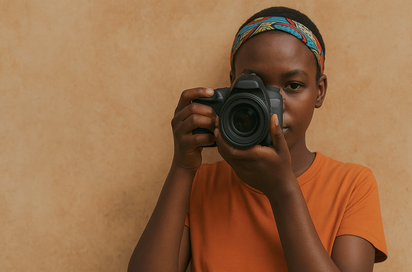
In Uganda and Tanzania, this organization offers more than just photography training. It provides young women a way to see themselves, and be seen, differently. It gives them not just tools but a moment to breathe, to speak, to be heard. And most of all, it offers something that far too many of us take for granted: a chance.
We often tell ourselves that opportunity is earned. That if someone wants something badly enough, they’ll find a way. Work hard. Stay focused. Push through.
But that belief doesn’t hold up when you see the full picture.
If we zoom out, we begin to see what’s often missing from that story: context. Privilege. Safety. Support. The things that many of us have so deeply woven into our lives that we stop noticing them. Things that make dreaming even possible.
Maslow’s hierarchy of needs tells us that until a person’s basic needs are met (shelter, food, safety, belonging), they cannot reach their full potential. You cannot focus on becoming who you are meant to be if you're constantly worried about how to survive.
I’ve worked remotely for years, a life many associate with freedom. The freedom to work from anywhere, to shape your day, to escape the grind. And yes, I’ve faced challenges: being a woman in spaces where decisions are often made by men, navigating the pressure to constantly prove myself. But for the most part, if I set my sights on something and worked hard, I could get there.
Until I couldn’t.
There was a time when I lost my housing. I kept working because I had no choice. Homelessness doesn’t stop the bills from coming — in fact, it adds new ones. The emotional toll was heavy, but I was more afraid of anyone finding out than of the hardship itself. I pretended everything was fine. But finding power to charge my laptop or internet to make a Zoom call became a daily battle. Some days I couldn’t find either. Sleeping in places that didn’t feel safe. Some days, I couldn’t shower. Some days, I couldn’t stop crying. The luxury of taking a class, building a new skill, or applying for something better felt entirely out of reach. I was trying every day just to hold on.
And yet from the outside, it would have been easy to say I was lucky. Employed. Educated. Resourceful. But I didn’t need encouragement. I needed stability. I didn’t need someone to tell me to work harder — I needed someone to see me. Really see me.
That’s why Cameras for Girls resonates so deeply with me.
Because they see these young women — not as victims, and not as projects. But as whole people with stories to tell and dreams worth fighting for. They don’t offer handouts. They offer space. A safe place. A shift in possibility. A new perspective, quite literally, through the lens of a camera.
And that kind of support — honest, dignified, human — can change everything.
Because when a girl is given the chance to tell her own story…
When she’s seen, heard, and believed…
When she is no longer just surviving, but starting to dream…
That’s when the world starts to change.
About the Author
Chelsey Gray is a Remote Nonprofit Data Specialist with 15 years in administration and 7 years in the nonprofit sector. She’s an amateur photographer, a passionate believer in equity, and someone who’s doing what she can — one story at a time — to help make the world a little more just.