
Walking the Path of Ethical Storytelling
Photography is often taught as a technical skill.Students learn about shutter speed, aperture, lighting, and composition. They learn how to frame a subject and capture a moment.
But photography alone does not create meaningful storytelling.
The moment a camera is pointed at another human being, something deeper enters the equation: at its core is a responsibility.
Who is telling the story? Why is it being told? How will the people in the image be represented? And where will it be shared?
At Cameras For Girls, these questions sit at the center of how we train the young women in our program.
Ethical storytelling is not treated as an optional discussion; it is a core part of the learning process that develops throughout the entire year.
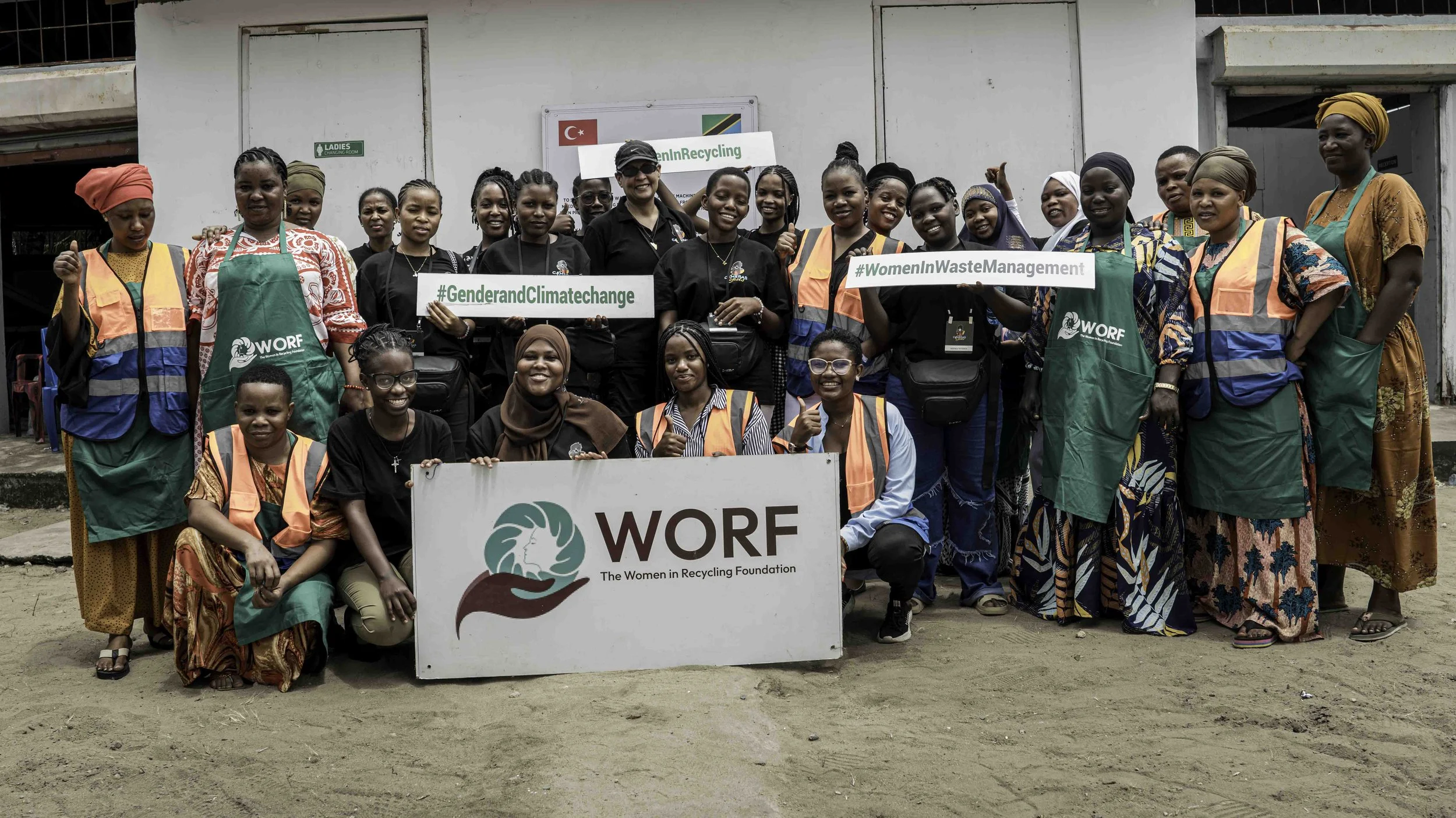
Cameras For Girls students with the women workers and staff at WORF. Photo taken by @Sheilla Clara
The First Steps in the Classroom
When students first enter the program, many have little experience with professional cameras. The early days of training focus on helping them understand the fundamentals of photography while also introducing the principles of ethical storytelling.
Fundamentals such as the exposure triangle, composition, and perspective.
From the start, students learn that every photograph carries meaning. Images shape how audiences understand communities, cultures, and social issues. Because of this, photographers must approach their work with care.
Students begin asking questions that many photographers are rarely taught to consider:
What does informed consent really look like?
How do we avoid reinforcing stereotypes in our images?
How can we document real challenges while still preserving dignity?
These conversations create the foundation for how students approach every assignment they will complete during the year. It’s especially important in global south communities, where colonial narratives have been widely used - again, we speak about responsibility.
Day Four: When Theory Meets Reality
The fourth day of the workshop marks an important turning point in the training.
After three days of classroom learning, students leave the classroom for their first field assignment. It is their opportunity to practice not only the technical skills they have learned, but also the ethical principles that guide their storytelling.
During this field experience, the students work alongside local organizations and community members, documenting real work and real lives. For the Tanzania cohort, this meant spending time with women involved in recycling initiatives through WORF (Women in Recycling Foundation).
WORF works with women in local communities to support recycling efforts and environmental sustainability while creating income-generating opportunities. Their work connects environmental responsibility with economic resilience, particularly for women whose livelihoods depend on collecting and processing recyclable materials.
For the students, the assignment was not simply to photograph what they saw.
They introduced themselves before lifting the camera.
They explained why they were there.
They asked permission and listened carefully to the people they were documenting.
They carefully reviewed our purpose-built consent form and asked for permission to document, share, and review their photos and stories with the participants.
What happened?
The women of WORF felt heard and seen. Their stories were not told about them; they were told with them. This is a core tenet of our teaching.
Instead of directing scenes or searching for dramatic moments, the students learned to observe quietly and allow the story to unfold naturally.
Often, the most powerful images emerged from the smallest details: hands sorting materials, tools moving through a process, and the quiet concentration of someone at work.
These are the moments that reveal the real story.
The Work Continues After the Camera Is Put Down
Ethical storytelling does not end when the photographs are taken.
Back in the classroom and during the weeks that follow, the students begin the editing process. They review their images, reflect on the stories behind them, and consider which photographs best represent the experience they witnessed.
Editing becomes another important stage of ethical decision-making. Students learn to ask themselves:
Which images tell the story honestly?
What context is needed for the audience to understand what they are seeing?
How can we ensure that the people in the photographs are represented with respect?
The students refine their work and prepare the final images and stories for delivery to the partner organization.
For the Tanzania cohort, the completed photos and stories were shared with WORF (Women in Recycling Foundation) for use in its communications and outreach. At the same time, the students began building their professional portfolios on Picdrop, one of our sponsors, which has given each student in our program their own portfolio. This portfolio allows them to share their work as they begin establishing themselves as photographers and visual storytellers, and it allows us as teachers to see their growth month to month.
A Year-Long Journey of Learning
The fourth day of the workshop is only the beginning.
Over the course of the year-long program, students continue completing assignments that strengthen both their technical abilities and their understanding of ethical storytelling. Each project encourages them to think carefully about the role they play when documenting people, communities, and social issues.
Gradually, they begin to see the camera differently.
It becomes more than a tool for creativity or documentation. It becomes a way to share stories honestly and responsibly, while dignifying the persons or communities in their stories.
Why Ethical Storytelling Matters
In many parts of the world, stories about communities are often told by outsiders. Images circulate without context, consent, or understanding of the people whose lives they represent.
When young women within these communities learn to tell their own stories, the narrative begins to shift. They bring cultural understanding, lived experience, and a deeper awareness of how stories affect the people within them. Their images carry a different perspective; one that reflects the realities of their communities with dignity and authenticity.
Through the Cameras For Girls program, these emerging photographers are not only developing professional skills; they are also learning to carry the responsibility that comes with documenting the world around them.
Ethical storytelling is not a single lesson. It is a path they continue walking long after the workshop ends.