
What 60 Students in Uganda Taught Us About Teaching Photography
This year, Cameras For Girls welcomed its largest cohort ever: 60 students in Uganda, made possible through funding from the Estée Lauder Beautiful Forces Grant, a signal that global brands are paying attention to how we’re building sustainable photography training for women that results in paid work in Africa’s male-dominated media.
The program kicked off in March, and five months in, UK-based documentary photographer Anja Poehlmann joined us for a Friday virtual training session that completely shifted our approach. Her session inspired a 30-day themed photo challenge, something new for us. After running it as our 6th assignment for our students, we followed up with a mid-program survey. The response confirmed what we already felt: this change worked. So we are making it permanent.
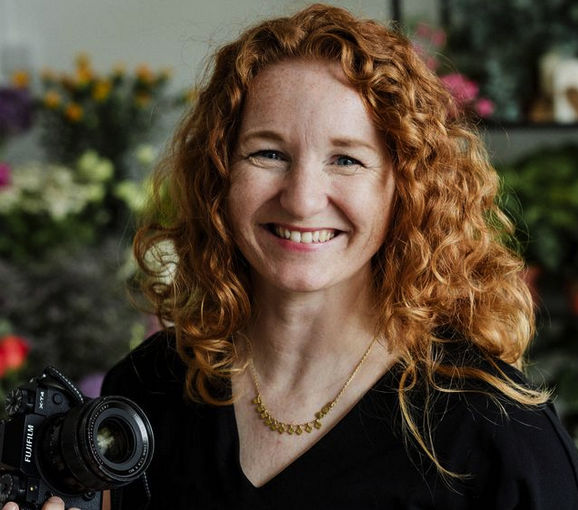
Anja Poehlmann, UK-based documentary photography
A New Way to Practice
Anja’s session wasn’t built around theory or technical mastery; it was about creating a habit of practice. She shared her personal Project 365, a commitment to shoot one photo a day starting on her birthday. Her approach was simple but powerful: focus on showing up consistently, rather than chasing perfect images.
That idea struck a chord. Many of the students in this cohort are balancing full lives, including university, jobs, caregiving, and the emotional labour that often goes unspoken. Anja’s message offered something different: a way to build photography into daily life, without the pressure of performance.
It also echoed something we’ve believed for a long time, that photography isn’t just a skill you learn and check off. It’s a practice. A process. A relationship you return to again and again. The camera becomes a tool for noticing, reflecting, and making sense of the world and yourself.
Even I, who have been practicing photography for over 15 years, have been rekindled by this practice, as it is hard to pick up my camera sometimes, between teaching about the craft.
We ran a 30-day photo challenge, inviting students to explore a single theme at their own pace. It wasn’t meant to replace the structure entirely, but to see what would happen when we shifted the focus from “finishing assignments” to building habits.
Listening Before Deciding
Then came our mid-program survey, a check-in to understand how the program was landing overall. What we heard confirmed what we’ve felt for a while: that while the current structure works for some, for many it can feel like a weight. Life doesn’t always allow for biweekly submissions and monthly assignments. That’s not a failure, that’s reality.
And if we’re not building this program with the students, adapting it to real-life challenges, listening to their feedback, involving them in shaping what comes next, then why are we doing it at all?
The 30-day challenge may be part of the answer. Or it might lead us to something else entirely. But one thing is clear: we’re not just testing a new method. We’re testing a new way of thinking about what growth looks like, one that’s co-created, flexible, and rooted in lived experience.
What This Means Moving Forward
This change isn’t about a one-time challenge or a single guest session. It’s about what happens when we stay open to change. Responsive, honest, grounded training is what leads to lasting growth, especially in environments where access to creative careers is still uneven and full of systemic barriers.
With support from funders like Estée Lauder and insights from photographers like Anja Poehlmann, who generously shared her process with our students, we’re rethinking what photography education can look like.
This is a model still in motion, and that’s precisely the point. It needs to respond not only to the changing media landscape, but to the real, everyday needs of our students. Because if the goal is to create lasting access to photography and storytelling careers, the process has to be built with them at the center, every step of the way.