
What Building Well in Tanzania Looks Like
We finished our third Cameras For Girls workshop in Tanzania on January 26, 2026. When the workshop ended, what stayed with me wasn’t the schedule or the milestones, but the responsibility that comes with doing this work well; making thoughtful choices and honouring the trust women place in us when they commit themselves to this journey.
That responsibility shows up in the decisions we make long before a workshop begins: who we select, how we structure the learning, when we introduce conversations about safety and mental health, and who stands at the front of the room as a leader. It also shows up in moments that aren’t always visible, such as saying no when it would be easier to say yes, choosing depth over numbers, and resisting pressure to move faster than the work allows.
Building well requires clarity and restraint. It means recognizing that real impact is not measured by how many people pass through a program, but by whether the women who do are supported in ways that allow them to grow, lead, and remain in the field long after the training ends.
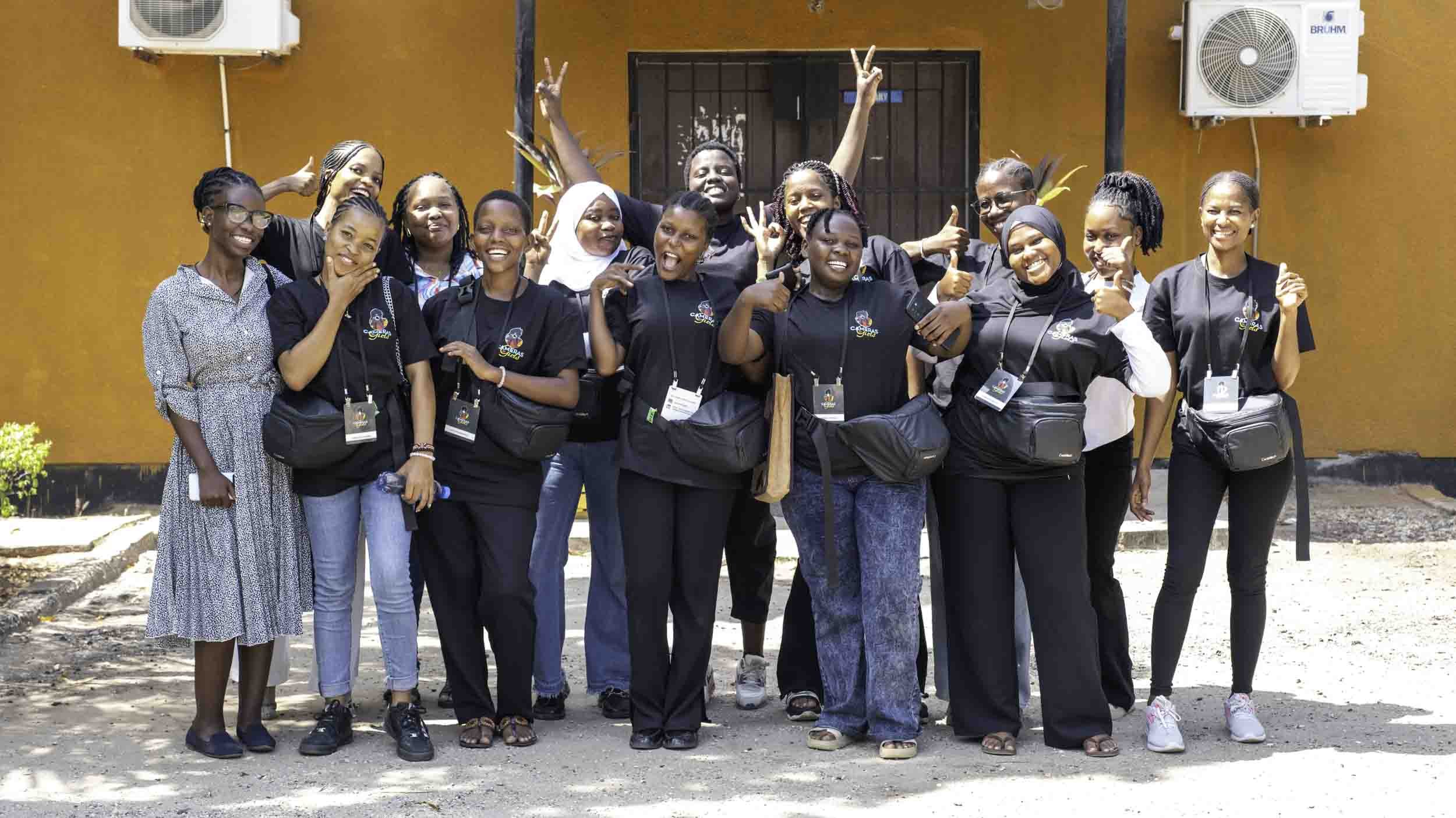
The 3rd cohort in Dar es Salaam, Tanzania
Why we trained 11 women, not 15 as planned
On paper, and during our year-end fundraising initiative, this workshop was supposed to host 15 participants. We trained 11.
That decision wasn’t about funding, logistics, or last-minute challenges. It was about standards.
Cameras For Girls is not a drop-in workshop. It’s a demanding, year-long program that requires discipline, follow-through, and a willingness to sit with discomfort as you learn new skills in male-dominated media spaces. We provide cameras, training, mentorship, and access, but we cannot manufacture commitment.
Over the years, we’ve learned a hard lesson: accepting participants who are primarily motivated by the prospect of receiving a camera does not serve them. Three months into the program, when the work becomes more rigorous, we are sometimes forced to ask women to step away and to return the camera. That experience is painful, avoidable, and unfair to everyone involved.
So this year, we chose differently.
We selected women who were serious about their own success, women who are prepared to work harder than I will for their growth. That choice protects the integrity of the program, the dignity of the participants, and the trust our donors place in us.
Mental health is not a side conversation
One of the most important changes we made this year was to address mental health and safety on day one, rather than day 3.
We partnered with TAHMEF as our mental health support partner, and instead of placing this session later in the workshop, we moved it to the first afternoon of Day One.
That shift was deliberate.
Advocating for your mental health and speaking out against sexual harassment cannot be framed as something to deal with “once you’re established” or “once there’s a problem.” For women entering male-dominated media spaces, these realities are immediate.
By addressing them from the very beginning, we set the tone with the following invitation.
You are allowed to name what you experience.
You are allowed to protect yourself.
You are allowed to ask for support.
What followed was powerful. The women listened deeply. They shared honestly. They supported one another without shame or judgment. This wasn’t performative vulnerability; it was the kind of grounded openness that builds trust and resilience.
This is how safety should be taught: early, clearly, and without apology.
Continuing to build sustainability with our Train the Trainer program
One of the moments I’m most proud of this year didn’t come from the curriculum. It came from the person who was standing beside me in the training room.
As part of our Train the Trainer program, we brought Sheilla Clara Apio, a Cameras For Girls graduate and trainer from Uganda, to Tanzania to co-facilitate the workshop.
This matters more than it might appear on the surface.
Sustainability is not a buzzword for us. It’s a practice. Every time we place women from our own program into leadership and training roles, we are actively shifting power, building local capacity, and preparing for a future where Cameras For Girls is fully locally led.
Cross-country collaboration among African women trainers strengthens regional learning, deepens confidence, and ensures leadership remains rooted in lived experience.
Aside from Sheilla, we also hired a former Tanzania student from Cohort 2, to document the workshop, namely, Elfrida Rutta, who found the experience transformative. Only a few months after graduating from our program, Elfrida found a job with a tourism company, working in wildlife management using her photography and ethical storytelling skills. We hire from within, as part of our sustainability promise, and our goal to be locally-led.
This is slow, intentional work. And it’s exactly the work that lasts.
Opening new pathways with drone training
This year, we introduced drone training for the first time, led by Tanzania Flying Labs.
It was a one-day pilot, but its impact was immediate.
Watching the women look up as the drone took flight was one of those moments you don’t forget. Drone skills expand what’s possible, from environmental storytelling to mapping, agriculture, and humanitarian documentation. For many of these women, it was the first time they could clearly see how their skills might translate into new kinds of work.
Sometimes opportunity doesn’t arrive with a grand announcement.
Sometimes it arrives quietly, hovering just above you, waiting to be noticed, and we are so grateful for this new partnership. As we seek funding to make this a permanent fixture in our Tanzania program (Uganda won’t allow it), we hope to attract funders who see the possibilities.
A partnership rooted in shared values
Our fourth-day practical training exercise was delivered in partnership with Women in Recycling Foundation, located in the heart of Dar es Salaam. They work with women to build a circular economy. The women learn how to recycle PET and other plastics in their communities, earning money to sustain their livelihoods and put their children through school. In turn, WORF takes the plastics, shreds them, and creates products for sale, such as eco-bricks, to support their programming.
We look for partners in-country so that our students can learn how to document stories during our workshop - this practical experience is the beginning of their year-long journey, and cements our ethical storytelling framework from the very beginning.
Why do we build this way
There is constant pressure in the nonprofit sector to move faster, reach more people, and demonstrate growth through ever-larger numbers. Scale is often treated as the clearest indicator of success. But numbers on their own rarely tell the full story of whether a program is actually working or sustainable.
What matters far more are the choices made beneath the surface: who is selected into a program, how they are supported once the training begins, who is positioned to step into leadership, and whether the skills being taught translate into real, lasting opportunities beyond the classroom.
This workshop served as a reminder of why Cameras For Girls continues to build in this way. We choose intention over speed, and depth over visibility, because the goal is not simply to run programs. The goal is to support women in building careers, to create pathways for leadership, and to develop models that can stand on their own long after we step back.
That is what building well looks like, and why we remain committed to it.