
Imagine a young woman in Uganda or Tanzania, where we currently run our year-long programs. She has studied journalism but has never owned a camera. She has the education, ambition, and desire to build a career in media, but every job opportunity seems to require practical experience she has never had the chance to gain.
Now imagine what changes when a company or foundation invests in more than just a workshop.
She receives a camera to keep, a year of practical training in photography and ethical storytelling, and the opportunity to build a professional portfolio. She learns how to price her services, negotiate with clients, prepare for interviews, and present her work confidently. Along the way, she accesses a 6-month mentorship program, with mentors who help her navigate challenges and prepare for paid opportunities.
That investment does not guarantee her a job. But it gives her a much stronger chance to pursue one, earn from her skills, and build a career that can continue long after the training ends.
What excites me most is seeing what becomes possible after the training ends. It might be a graduate securing her first paid assignment, finding the confidence to approach a potential employer, or realizing that the skills she has developed can help her earn an income.
At Cameras For Girls, these are the moments that have shaped how we support young African women pursuing careers in journalism, photography, communications, and visual storytelling.
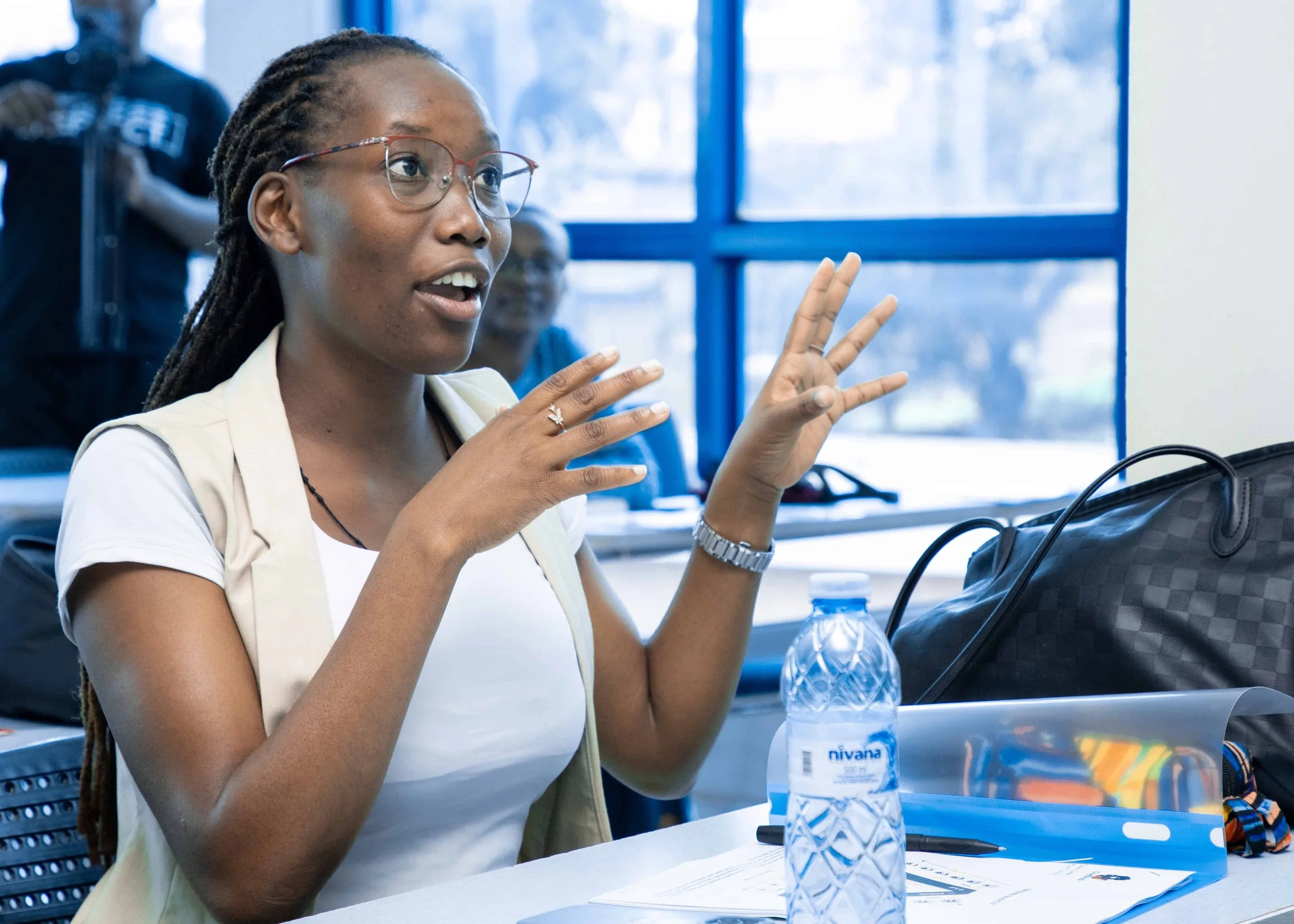
Frances Itiang, a 5th cohort Alumni, poses a question during the Alumni Workshop, Uganda 2026. Photo by Joyce Mollan.
Why Training Is Only the Beginning
When we started Cameras For Girls, we knew that many young women graduating from journalism and communications programs in Uganda had the theoretical knowledge but lacked the equipment and practical experience needed to compete for jobs.
Providing a camera and photography training helped address those immediate gender-based barriers. Women were told they needed to own a camera and know how to use it to secure paid work. But we quickly learned that owning equipment and knowing how to use it did not automatically translate into paid work.
Our graduates still needed to understand how to market themselves, build portfolios, develop professional relationships, communicate with clients, negotiate fair payment, and navigate workplaces where women are often underrepresented.
That is why our program evolved into a year-long learning experience that combines technical training, ethical storytelling, business development, mentorship, and career support.
For CSR teams and foundations, investing in a program that goes beyond training creates an opportunity to see their funding translate into meaningful, measurable outcomes. Instead of only reporting how many women completed a workshop, they can see graduates build portfolios, secure paid assignments, enter employment, and develop careers.
This gives funders something valuable in return: tangible results they can share with their boards, employees, and stakeholders; greater confidence in how their funding is used; and the knowledge that their investment is helping create opportunities that can continue long after the initial program ends.
Why Mentorship Makes the Investment Stronger
One of the most valuable parts of our work is also one of the least visible. I call it our secret sauce. Mentorship.
Our mentors work with students and graduates on practical career challenges, from refining their CVs and LinkedIn profiles to preparing for job interviews, strengthening portfolios, and understanding how to position themselves professionally. We also match mentors and mentees based on their career goals. For instance, if she wants to become a photojournalist, we will find her a photojournalist who can help her walk the path to success.
Recently, Hope, one of our graduates, shared the news that she had secured paid employment as a Social Media Manager.
Through Cameras For Girls, she had been connected with Evette, a Canadian coach and HR consultant. Together, they worked on interview preparation, including a mock interview, while also building Hope’s professional confidence. Hope had already been putting in the work. Her mentor helped her prepare for the opportunity she eventually secured.
Hope’s story shows why investing in women cannot be limited to teaching a skill. Sometimes the support that makes the difference happens months after the workshop, through a conversation, a mentor’s guidance, or preparation for an interview.
These moments don't always make it into a donor report, but they are often the ones that matter most.
Paid Work Has to Be Part of the Plan
At Cameras For Girls, our goal has never been to just train photographers and give out cameras. It is to help young women move into paid work in male-dominated media spaces, including journalism, communications, and photography-related careers.
A graduate may have a strong portfolio and excellent technical skills, but if employers and organizations won't hire her, the pathway remains incomplete. We have seen how difficult it can be for young women to move beyond unpaid internships, volunteer assignments, or requests to work for exposure. This is why our business skills training includes pricing, negotiation, client relationships, and professional communication.
It is also why we actively encourage organizations to hire our students and graduates for photography, videography, communications, event coverage, and ethical storytelling assignments. That first paid opportunity can help a young woman establish her professional reputation, gain a testimonial, strengthen her portfolio, and begin building relationships with future clients.
Local Leadership Makes the Investment Go Further
Another lesson we have learned is that long-term impact cannot depend on one founder or a visiting trainer. Through our Train the Trainer Program, Cameras For Girls graduates are developing the skills to train and mentor future students. They bring their own professional experiences into the classroom, understand the local media environment, and help strengthen the program from within Uganda.
We continue to invest in our local team, coordination, training capacity, and decision-making processes because we know a sustainable organization needs strong leadership where the work happens. This is especially important as we consider expanding our programs to other African countries.
A foundation may fund a training program for one cohort, but when that investment also strengthens local trainers and organizational capacity, its value can extend beyond those original participants. That is the kind of growth we want to build.
The Work Behind the Results Matters Too
I also believe funders need to understand the infrastructure required to deliver meaningful programs. It is easy to see the value of cameras, workshops, and training materials because they are tangible. But what about the local coordinator following up with students, the mentor spending time preparing a graduate for an interview, or the trainer reviewing assignments and giving feedback?
What about safeguarding, financial management, transportation, online learning, and the systems that help us deliver our programs responsibly? These costs may not be as visible, but without them, program quality and continuity can suffer.
Our recent alumni training in Uganda reminded us of this when a practical assignment did not go according to plan. We had to review our approach to partner selection and field safety, listen to our local team, and identify improvements. That experience reinforced something I now believe strongly: investing in infrastructure is investing in impact.
For small charities, flexible funding and longer-term partnerships can make an enormous difference because they allow us to strengthen the systems behind the programs, not just deliver the activities themselves.
How Do We Know an Investment Is Lasting?
I understand that companies and foundations need measurable results. They have a responsibility to know whether their funding is making a difference, and we have an equal responsibility to show it.
At Cameras For Girls, our work does not end with workshop attendance or training completion. We stay connected with our graduates, tracking their progress as they build portfolios, secure clients, move into paid employment, and develop their careers. We also listen to the challenges they continue to face because that feedback helps us strengthen our programs and use the funding entrusted to us more effectively.
For our funding partners, this means having meaningful results to share with their boards, employees, and stakeholders, along with greater insight into how their support is being used. It also means working with an organization that values transparency, honest reporting, and learning from both its successes and challenges.
We know that lasting impact takes time. Not every graduate follows the same path, and not every opportunity comes immediately. That is why continued mentorship, local leadership, and organizational capacity are so important to our model.
For CSR teams and foundations, a partnership can also extend beyond financial support. Professional mentorship, industry connections, practical assignments, and introductions to employers can all help create opportunities for our graduates. Financial investment makes our programs possible, but combining that investment with professional expertise and access to networks can help young women turn their skills into sustainable paid work.
Partner with us to help more young African women move from camera to career.