
What Programs Are Available to Help Women in Africa Pursue Careers in Media?
Many young women in Africa want to build careers in journalism, photography, communications, and storytelling. They have the ambition. They have the education. They have the desire to tell stories from within their own communities.
But too often, they do not have the tools or support needed to turn that education into paid work.
A young woman may graduate from a journalism or communications program and still be told she needs a camera before she can get published. She may be asked for a portfolio before she has had the chance to build one. She may know she wants to work in media, but lack the mentorship, business skills, professional network, or paid assignments needed to begin.
That is the gap Cameras For Girls was created to fill.
Our work is not only about teaching photography. It is about helping young African women move from learning a skill to using that skill in real media spaces, with the goal of earning income through journalism, photography, communications, ethical storytelling, and visual content creation.
To do that, we have built a pathway of programs that complement each other.
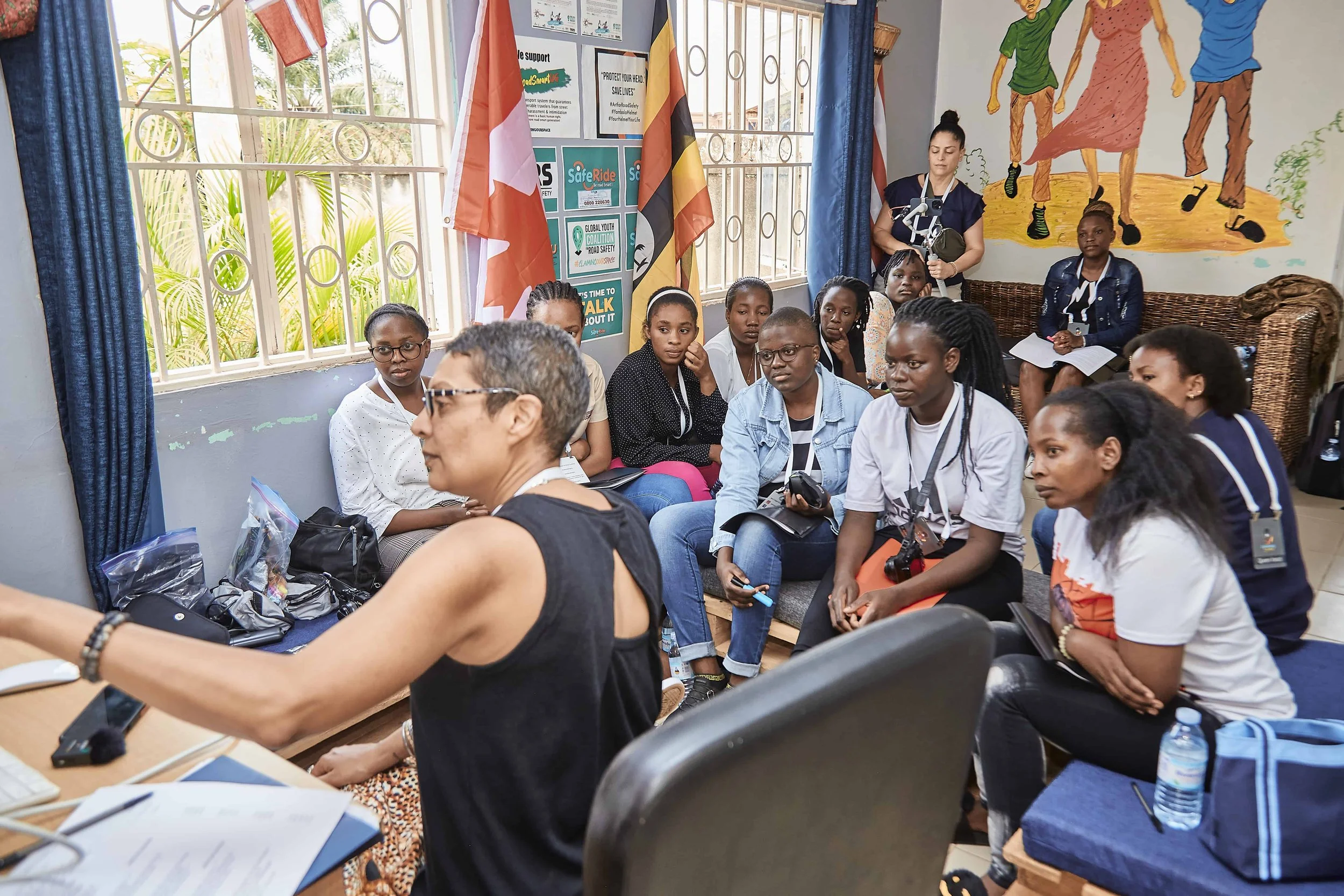
Amina teaching the 3rd cohort in Uganda, 2023 Photo by @Daniel Semwogerere
Why Media Career Programs Matter for African Women
Media shapes what people see, believe, understand, and remember. When women are missing from media, their stories are often told by someone else, or not told at all.
The questions change when women are behind the camera. The context changes. The relationship with the person being photographed changes.
Think about a rural woman facing issues that shape her daily life: no access to clean drinking water, the risk of gender-based violence while walking long distances to collect water, early child marriage, poverty, illness, or the many other realities she may carry quietly.
If no women in media sit with her, listen to her, understand the cultural context, and help her tell that story with dignity, then too often the story is missed. In male-dominated spaces, those experiences may be overlooked, misunderstood, or never asked about in the first place.
And when those stories go untold, they begin to disappear from public memory. Not because they do not exist. But because the people best positioned to hear, understand, and tell them were never given the tools, access, or opportunity to do so.
Many young women face barriers that have nothing to do with their ability. They may not own a camera. They may not have access to practical training. They may be entering media spaces where women are underestimated, overlooked, or expected to prove themselves repeatedly before being given the same opportunities as men.
This is why programs for women in media must go beyond inspiration. They must provide tools, training, mentorship and real pathways to paid work.
At Cameras For Girls, that is the model we are building.
Our Year-Long Photography and Ethical Storytelling Program
Our year-long program is the foundation of our work. Each student receives a camera to keep and begins with hands-on training in photography, camera basics, manual settings, composition, and visual and ethical storytelling.
But the program does not end after the first workshop.
A short workshop can introduce a student to a skill, but it does not create a career pathway on its own. Young women need time to practice, make mistakes, receive feedback, improve, and begin seeing themselves as media professionals.
Through the year-long program, students continue learning after the initial four-day in-person training. They complete assignments, strengthen their photography skills, build confidence, and begin developing a portfolio they can use to apply for jobs, pitch clients, or pursue freelance work.
The goal is not simply for a student to take better photos. The goal is for her to understand how to use photography and ethical storytelling, which is the framework that surrounds our work, to build her professional skills.
Ethical Storytelling Training
Photography is powerful, but it also carries responsibility. That is why ethical storytelling is woven throughout our programs.
We teach students that the person in front of the camera is not simply a subject. She is not content. She is not a story waiting to be taken. She is a person with dignity, agency, and the right to decide how her story is told.
Our students learn to ask for consent, listen before they photograph, understand context, and tell stories with people, not about them.
This matters because too many stories about African communities have been shaped from the outside looking in. Poverty, pain, and struggle are often photographed without enough attention to dignity, complexity, joy, leadership, or agency.
Ethical storytelling helps them become stronger photographers, journalists, communicators, and visual storytellers by teaching them to build trust. And trust is essential in any media career.
The Online Learning Hub
Our Online Learning Hub gives students continued access to training beyond the in-person workshop. It is the backbone of our year-long training, allowing us to reach our students where they are, twenty-four-seven.
Students need to return to lessons, review concepts, practice at their own pace, and keep building their skills throughout the year. The Online Learning Hub supports this by offering training in photography, storytelling, and business skills.
It also helps us reach more young women across Africa, including those who may not yet be part of the full year-long program.
For students who are trying to enter media, continued learning is essential. The industry changes quickly. Digital storytelling, social media, visual communications, and content creation all require young women to keep practicing and adapting.
The Online Learning Hub helps make that possible. We are launching our NEW Online Learning Hub in partnership with Networked, which will make learning more supportive and exciting.
Mentorship and Career Support
Mentorship is one of the most important parts of the Cameras For Girls model. A student may learn how to use her camera, but still need someone to guide her through the next steps.
How does she build a portfolio?
How does she talk about her work?
How does she prepare for paid assignments?
How does she advocate for fair payment?
How does she keep going when she is told she does not belong in media?
Mentorship helps answer those questions. Through mentorship and career support, students receive encouragement, feedback, and practical guidance as they move from training into real opportunities. This support helps them build confidence, strengthen their professional presence, and prepare for work in journalism, photography, communications, social media, NGO storytelling, brand storytelling, and freelance media.
Our mentors come from all walks of life, including journalism, communications, photography, HR, marketing, and more. We pair our students with the right mentors to help them reach their goals.
We call our mentorship program, our secret sauce because training opens the door, but mentorship helps students keep walking through it, with confidence and the knowledge they need to pursue paid work in a male-dominated space.
Business Skills for Media Careers
One of the biggest lessons we have learned is that photography training alone is not enough. If a young woman is going to earn from her skills, she also needs business knowledge.
She needs to understand pricing, know how to speak with clients, advocate for fair payment, meet deadlines, communicate professionally, and position her work in a way that helps others understand its value.
She also needs to know how to use the professional tools available to her, including a purpose-built LinkedIn profile. For our students, LinkedIn is not just a place to post updates. It becomes a space where they can show their work, build connections, network with confidence, and begin positioning themselves for the jobs and paid opportunities they want to pursue.
That is why business skills are part of our program. We want our students to leave with more than confidence. We want them to understand that their time, skill, perspective, and creative work have value.
This is especially important because young women in media are too often asked to volunteer, work for exposure, or accept less than their work is worth.
At Cameras For Girls, paid work is the goal.
Whether a graduate moves into full-time employment, contract work, freelance assignments, or short-term projects, she needs to understand how to turn her skills into income.
The Job Creation Program
Our Job Creation Program focuses on the outcome we are intentionally working toward: paid work.
Cameras For Girls does not believe training should end with a certificate. A certificate may show that a student attended a program, but it does not build a career on its own. Paid work does.
A paid assignment gives a student real-world experience. It gives her a client. It gives her a deadline. It gives her portfolio material. It gives her a testimonial. It gives her another answer when someone asks, “Have you done this before?”
Through our Job Creation Program, we help create and support pathways into media-related work. This can include journalism, photography, communications roles, event coverage, nonprofit storytelling, campaign content, social media, brand storytelling, and freelance assignments.
The goal is to help graduates move from learning to earning.
The Train the Trainer Program
The Train the Trainer Program is another important part of our pathway. When a Cameras For Girls graduate becomes a trainer, something powerful happens. She is no longer only receiving knowledge. She carries it forward to her peers and, most importantly, shows other young girls that a career in media is within reach.
She is no longer only building her own confidence. She is helping another young woman build hers. She is no longer only using her camera for her own opportunities. She is helping widen the pathway for the students coming behind her.
If Cameras For Girls is going to grow across Africa, we need local trainers, local leadership, and graduates paid to carry the work forward in their own communities.
The Train the Trainer Program helps build that future. It supports leadership, sustainability, and the ripple effect of women training women in media.
The Work With Us Program
Another way Cameras For Girls supports media careers is through our Work With Us pathway.
Organizations, nonprofits, businesses, schools, foundations, and community projects can hire Cameras For Girls students and graduates for photography, videography, event coverage, campaign content, NGO storytelling, portraits, field documentation, and visual storytelling projects.
This matters because many organizations need strong visual content, and our graduates need paid opportunities to keep building their experience. When an organization hires a Cameras For Girls graduate, everyone gains.
The organization receives professional visual storytelling support. The graduate gains paid work, portfolio material, and a client testimonial. The community story is documented with care and context, within our ethical storytelling framework. Another young woman moves one step closer to building a sustainable income from her skills.
A Pathway From Camera to Career
Each Cameras For Girls program plays a different role, but they are all connected. The year-long program builds the foundation by giving students the tools, training, and support they need to begin. Ethical storytelling teaches responsibility and helps them understand the dignity, consent, and care required when telling someone else’s story.
From there, the Online Learning Hub supports continued learning, while mentorship helps students build confidence, strengthen their skills, and grow professionally. Business skills prepare them for paid work by teaching them how to understand their value, communicate with clients, advocate for fair payment, and position themselves for opportunities.
The Job Creation Program helps graduates move into real opportunities, while the Train the Trainer Program builds local leadership by preparing graduates to teach, mentor, and support future cohorts. Through our Work With Us pathway, students and graduates can also connect with clients and assignments that allow them to gain experience, build portfolios, and earn from their skills.
Together, these programs create a pathway from camera to career. That is what makes Cameras For Girls different. We do not only ask, “Did she learn photography?” We ask, “Can she use this skill to build a future?”
Support Women Building Careers in Media
A camera can open the door, but lasting impact takes more than one tool or one workshop. It takes training, mentorship, business skills, career support, and the paid opportunities that help young women move from learning into work.
That is why Cameras For Girls offers connected programs that support women in Africa pursuing careers in media, including our year-long photography and ethical storytelling program, Online Learning Hub, mentorship, Job Creation Program, Train the Trainer Program, and Work With Us pathway.
When you support Cameras For Girls, you help build the bridge between education and employment. You help young African women gain the tools, confidence, and professional support they need to pursue careers in photography, journalism, communications, and storytelling.