
After sharing my recent blog, Gender Equity: Are We Changing Lives or Changing Systems?, I received a thoughtful response that made me consider something we don’t talk about enough in nonprofit partnerships.
What if our partners did more than help us deliver programs? What if they also helped us challenge the barriers that made those programs necessary in the first place?
At Cameras For Girls, we provide young African women studying to be journalists, photographers, and communications professionals with cameras, practical photography training, ethical storytelling training, mentorship, and business skills. We can help them prepare for interviews, build portfolios, and connect with paid opportunities.
But we cannot change hiring practices, workplace cultures, or access to professional networks on our own.
That requires the involvement of the very organizations and industries our graduates are trying to enter.
And it raises an important question: What would happen if every partnership we developed also became an opportunity to advocate for fairer access to careers for women?
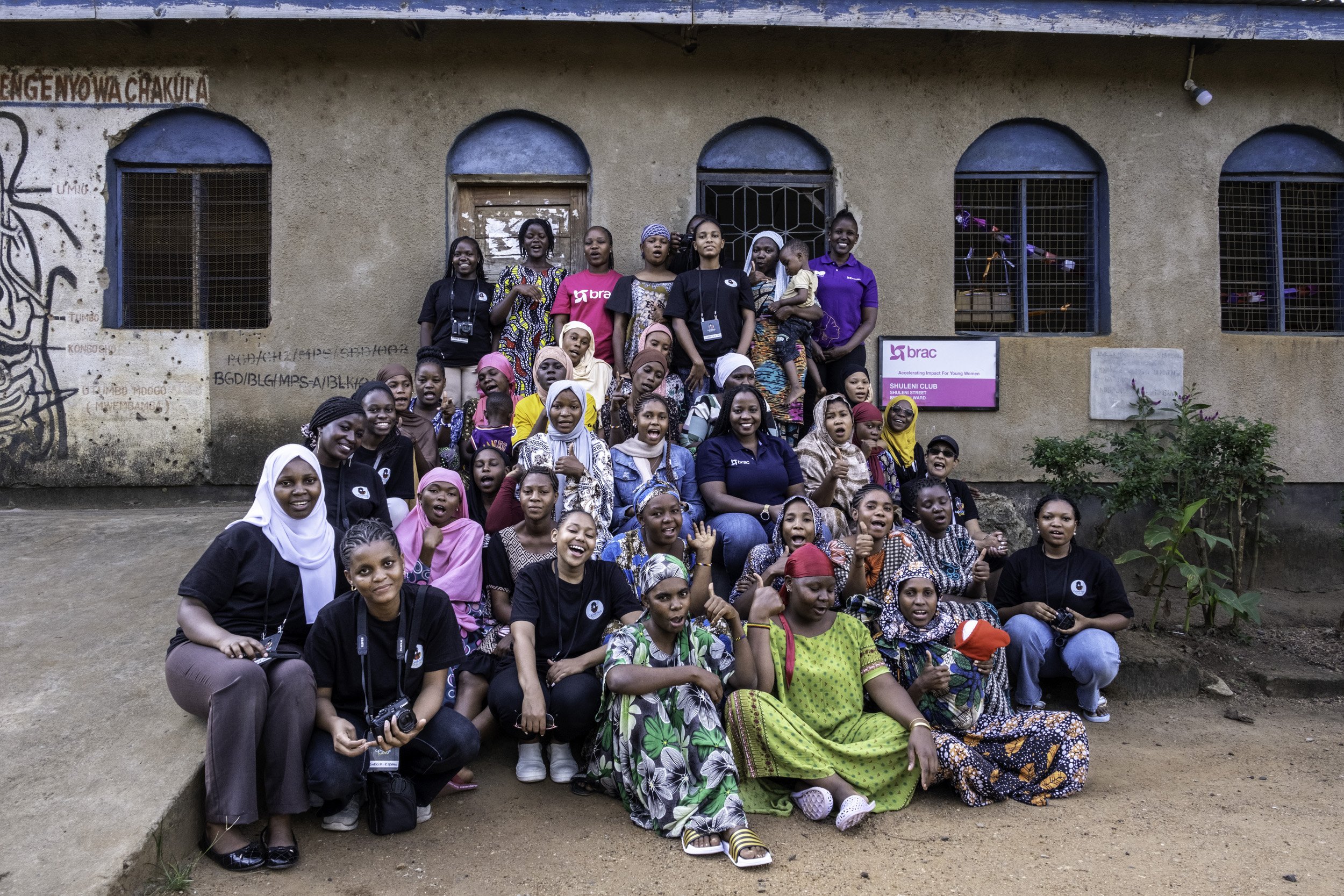
Photo of our Tanzanian students, Cohort 2, with BRAC participants, advocating for gender equity, November 2024
Funding Makes the Work Possible, but Partnerships Can Go Further
I want to be clear that financial support is essential to what we do. Without our donors, funders, and partners, we could not provide cameras, deliver our year-long training, support our local team, offer our online learning hub for free or continue mentoring our students as they work toward careers in media.
But funding a training program and helping change the industry our students are entering are two different things.
A company might support our photography training while continuing to hire the same photographers it has always worked with. An NGO might invest in women’s economic opportunity but overlook local women when it needs someone to document a project. A media organization might speak publicly about gender equity while its own professional networks remain difficult for young women to access.
I don’t believe these contradictions are always intentional. Sometimes organizations are simply doing what they have always done, without questioning whether their decisions are contributing to the barriers they say they want to address.
That's exactly why partnerships that are not mutually exclusive are important. They let us have conversations that go beyond how much funding a program needs and explore what each partner, whether they be a media house, an NGO or even a corporation, can do differently when it comes to creating career opportunities for women.
Advocacy Does Not Always Mean Changing Policy
When we hear the word advocacy, we often think about governments, legislation, public campaigns, or major institutional reforms. But I believe advocacy can also begin with everyday professional decisions.
It can happen when a company chooses to hire a qualified young woman photographer for an assignment. It can happen when an NGO includes photography and storytelling in its project budget and pays a local professional fairly. It can happen when an employer opens its recruitment process to people outside its usual networks.
It can also happen when someone in a position of influence recommends a young woman for an opportunity she might otherwise never hear about.
These actions may not attract much public attention, but they can make a real difference to someone’s career.
At Cameras For Girls, we teach our students how to price their services, negotiate with clients, develop portfolios, and advocate for fair payment. We can help prepare women for opportunities, but we also need partners willing to make those opportunities available.
What Our Graduates Have Taught Us About Access
One of the biggest lessons I have learned through Cameras For Girls is that talent is rarely the problem. Our students and graduates are ambitious, capable, and eager to build careers in journalism, photography, communications, and visual storytelling. What they often lack are the professional connections and opportunities that help turn those skills into income.
We have seen how meaningful even one paid assignment can be. Peninah, one of our students in Uganda, has been able to use income from photography assignments to help cover her university expenses while gaining professional experience.
Other graduates have moved from volunteering to paid communications roles or secured assignments that let them build their portfolios and establish relationships with clients. These are achievements worth celebrating, but they also reveal something important.
Someone had to be willing to hire them.
A client had to recognize their skills. An organization had to create an opportunity. Someone had to connect a young woman ready to work with a professional assignment that needed to be completed.
That is why our “Work With Us” program matters. We are not simply asking organizations to support our students. We are helping them recognize that our students and graduates have skills they can use professionally.
And I believe this is where our partnerships could have an even greater influence.
What Would It Look Like if We Advocated Together?
Imagine what could change if the organizations connected to Cameras For Girls also became advocates for greater career equality in their own industries.
A university could work with employers to create clearer pathways between graduation and employment. A media house could review how it recruits and supports women entering the profession. A corporate partner could introduce qualified graduates to its communications team or professional networks.
An NGO working in Uganda or Tanzania could choose to hire local women storytellers instead of automatically bringing in someone from outside the community.
And foundations could support not only training, but also the longer-term work of connecting women to employment, strengthening local leadership, and addressing barriers that continue after graduation.
None of these organizations has to take on every challenge. But each has influence over certain decisions, relationships, and resources. What interests me is what could happen if we began connecting those contributions instead of treating them as separate activities.
Of course, the women themselves must be part of these conversations. Our students and graduates know firsthand what makes it difficult to enter media spaces, what support has helped them, and what still stands in their way.
We cannot advocate for better opportunities without listening to the women who are trying to access them.
Partnerships Should Create Opportunities Beyond Our Programs
As Cameras For Girls continues building relationships with funders, businesses, NGOs, universities, and media organizations, I want us to think more intentionally about advocacy as part of those partnerships.
Not because every partner needs to become a campaigner for gender equity, but because meaningful change can begin within their own organization.
That might mean reconsidering hiring practices, making introductions, paying fairly for creative work, or opening professional networks to talented young women who have historically been excluded.
It also means looking at ourselves and asking whether we are creating space for our graduates to influence the decisions that affect their futures. We are still learning how to do this well. But the response to my previous blog reminded me that we have an opportunity to think beyond the programs we deliver.
What if we measured a partnership's success not only by how many women received training, but also by how many doors remained open for other women afterward?
We want to build partnerships that do more than support our programs. We want to work with organizations that share our commitment to creating lasting career opportunities for African women, including those who may never participate in Cameras For Girls.
If your organization believes in opening doors for women in media, we would love to explore what we can achieve together.