
Why Monthly Giving Matters More Than Ever: Reflections on the Cameras For Girls Annual Report
Blog By Chelsey Gray
I recently received the Cameras For Girls annual report, and it’s one of those documents that makes you stop, reread sections, and sit with the reality behind the numbers. This is not just a year-end summary—it’s a clear picture of what steady support makes possible, and what’s at stake as funding models shift.
A year of real impact, not abstract outcomes
In 2025, Cameras For Girls trained women across Uganda and Tanzania, expanded its online learning hub to reach thousands more, and launched a Train-the-Trainer program that is finally putting local leadership at the center of long-term sustainability. Over 80% of graduates in Uganda and more than 65% in Tanzania are now employed in male-dominated media sectors. These aren’t aspirational metrics—they are concrete, career-changing results.
One detail that stayed with me: mental health support was not originally part of the curriculum, yet it became a lifeline for students navigating unsafe environments, trauma, and pressure. Nineteen young women were guided away from suicide ideation and back into stability. That kind of responsiveness only exists in organizations that are deeply embedded in the communities they serve.
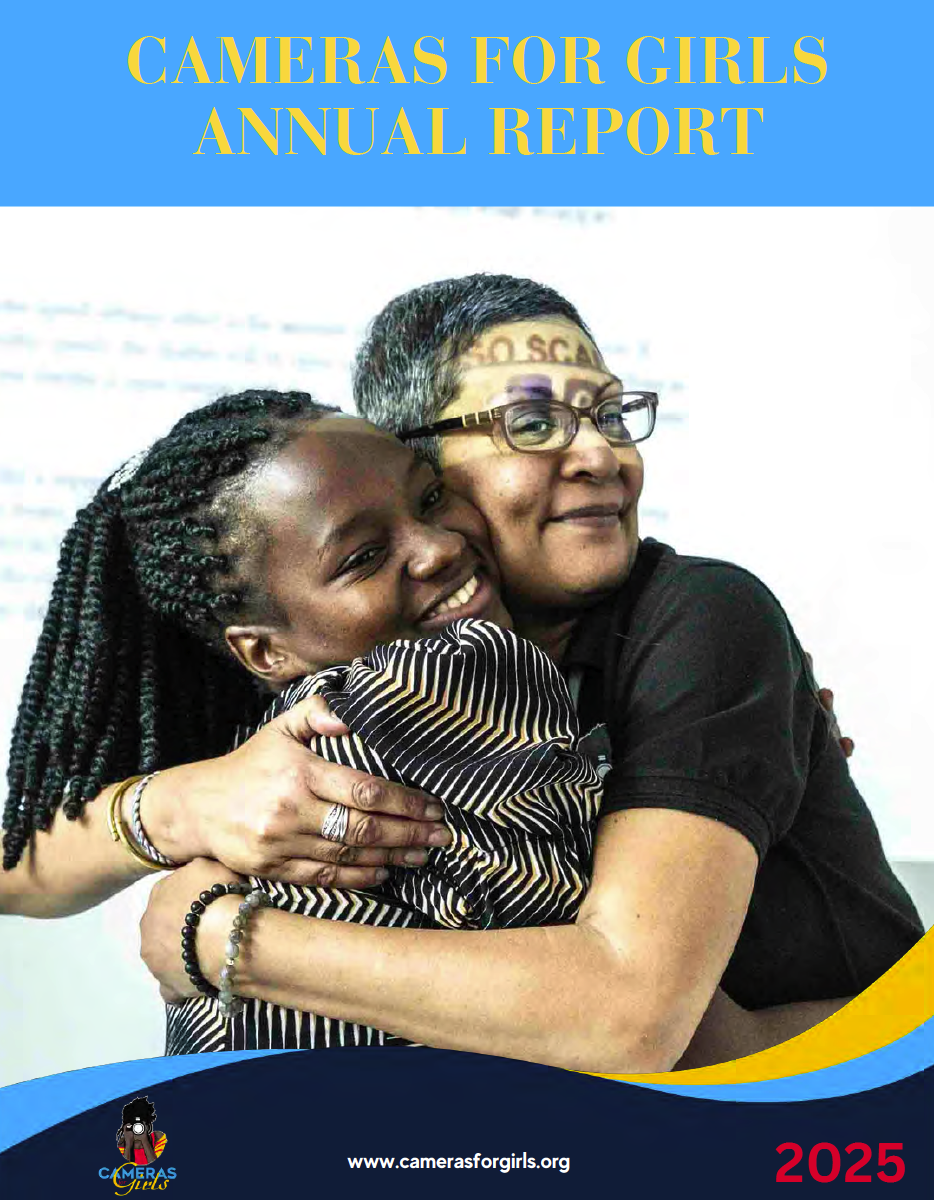
Download our annual report at https://bit.ly/49rF4fn
The funding reality nonprofits are facing
What the report also makes clear is something many nonprofits are quietly grappling with: grant funding is becoming more competitive and less reliable, even for organizations with strong outcomes and consistent results. Cameras For Girls was not directly hit by USAID cuts, but the ripple effects were real—no grant applications were approved this year.
Rather than scaling back the mission, the organization made a strategic decision to shift away from grant dependency and toward diversified, sustainable funding: monthly giving, job-placement sponsorships, corporate partnerships on the continent, and earned revenue streams.
This matters because programs like this do not fail due to lack of impact—they fail due to lack of predictable cash flow.
Why monthly giving actually matters (from a monthly donor)
I’m a monthly donor to Cameras For Girls, and reading this report reinforced why that matters. Monthly gifts allow organizations to plan responsibly, retain staff, and respond to real-time needs without waiting for the next funding cycle. They make it possible to invest in leadership, not just programming.
Even modest monthly contributions add up to something far more powerful than one-time gifts: stability. Stability is what allows students to finish programs, trainers to be paid, and founders like Amina to lead instead of carrying every operational role alone.
The roles that need to be filled
The report is refreshingly honest about what’s needed next. To scale responsibly, Cameras For Girls needs capacity funding for:
● A Country Manager in Uganda, to oversee operations and partnerships on the ground
● A Field Data role in Uganda, ensuring outcomes, reporting, and learning are captured accurately
● Fractional support in Canada, so the organization is not dependent on one person doing everything
These are not “nice to have” roles. They are essential for sustainability, accountability, and growth.
A clear invitation
If you’re someone who cares about ethical storytelling, women’s economic power, and locally led solutions—and especially if you’ve ever wondered whether monthly giving really makes a difference—this report answers that question clearly.
Monthly support is what allows this work to stay steady, human, and responsive. It’s what turns strong programs into durable institutions.
I encourage you to read the report, share it, and if you’re able, consider becoming a monthly donor yourself. One story, one camera, and one life at a time only works when the support behind it is just as consistent.
About the Author
Chelsey Gray is a Remote Nonprofit Data Specialist with over 15 years of administrative experience, seven years in the nonprofit sector, and a background in technical writing. Her work centers on building clear, sustainable systems that support long-term impact in mission-driven organizations. As a monthly donor, amateur photographer, and volunteer with Cameras For Girls, she is particularly invested in ethical storytelling and funding models that provide stability, shared leadership, and room for organizations to grow responsibly