
How Photography Builds Bridges Across Cultures
I recently had the honour of leading a 3-day photography and storytelling session with a group of Indigenous women from Sandy Lake First Nation—a community of women, men, and children who had been forcibly evacuated from Manitoba due to the raging wildfires and relocated to northern Ontario.
These women, ranging in age from 14 to over 60, brought with them a resilience that’s hard to put into words. What they’ve endured—displacement, systemic barriers, historical trauma, and the daily impact of being marginalized—could have made them retreat inward. But instead, they showed up. Open, generous, creative, and strong.
This wasn’t a technical workshop. It wasn’t about f-stops or ISO. It was about using photography as a tool for connection, healing, and self-expression. We captured moments that reflected who they are and where they come from. The training took place at Trent University in partnership with the First Peoples House of Learning and was generously supported by the Indigenous Women’s Fund of Canada.
Reflecting on the Land and Our Role
The women came from Haudenosaunee, Métis, Anishinaabe, Cree, and Ojibwe Nations, each with their own languages, traditions, and lived experiences. In Peterborough (Nogojiwanong), the traditional territory of the Michi Saagiig Anishinaabeg, I found myself reflecting on the land acknowledgements we often hear at events.
We recite them because we feel obligated, but do we understand what they truly mean?
During the training, I asked myself: Have I really taken the time to learn about the keepers of the land I live on? That evening, I brought the question to my Toastmasters group. The silence that followed said everything. Most of us didn’t have an answer, including me, until this experience, which further shaped how I see other cultures, especially the Indigenous communities.
But this experience reminded me of the value of choosing to learn, not out of duty, but from a genuine desire to understand and honour the people whose land we live on.
Listening Before Leading
I brought with me the same approach I’ve used in Uganda and Tanzania, leading by listening. I offered camera instruction when needed, but mostly, I held space. I witnessed stories unfold through photographs, spoken word, laughter, and a few tears (mostly mine).
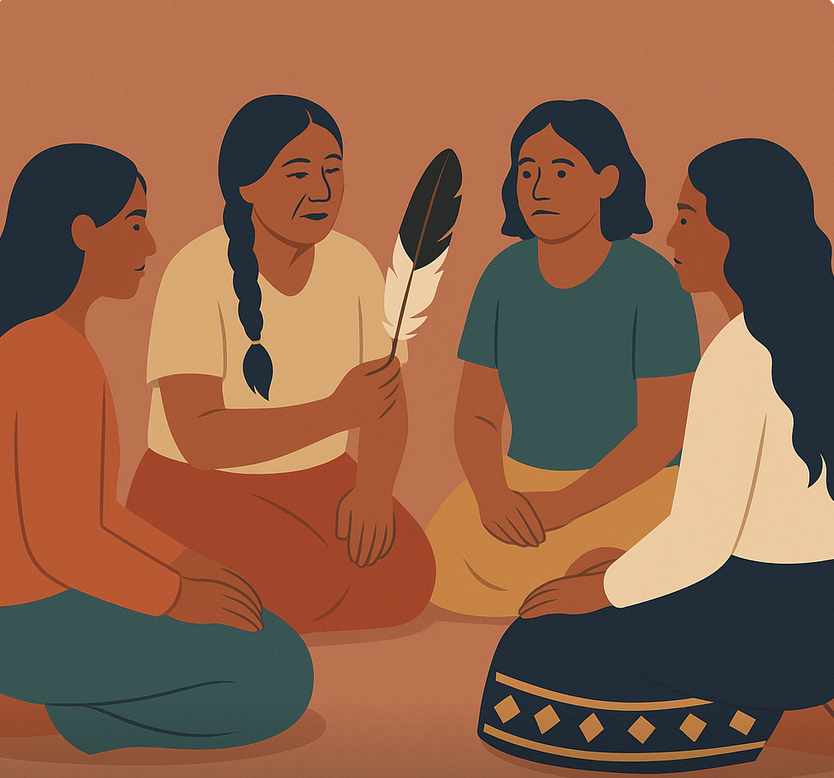
One of the most powerful moments was the passing of the Eagle Feather, a sacred practice that invites each person to speak while others listen in silence. No interruptions. No fixes. No judgement. Just presence. It was a beautiful sharing, and even a few of the young women, who did not speak during our photography sessions, chose to share their feelings during this time.
Stories That Shape Us
What I experienced contradicted every stereotype still lingering in our collective narratives. I met teachers, therapists, artists, land protectors, and mothers. Women who are deeply committed to preserving their communities and cultures.
This experience reminded me of a core truth I carry with Cameras For Girls: the most powerful stories aren’t the ones we tell about people, but the ones they tell themselves. Our job is not to speak for them, but to create space where their stories can rise.
A Path Forward
I’ve come away from this experience with a quiet but persistent question: Could this be a way forward for Cameras For Girls, right here in Canada?
Could we thoughtfully extend our work to support Indigenous communities through photography and storytelling, just as we have in Africa, offering tools, space, and training rooted in dignity and collaboration?
We don’t have all the answers. But we’re listening. And that, I believe, is where every meaningful step begins.
To the women of Sandy Lake: thank you for your stories, your creativity, and your strength. You reminded me that photography is more than a skill; it’s a mirror, a memory, and a bridge.
And to you, our community: if you’re reading this, I invite you to keep listening too. Let’s ask better questions, make more space, and take thoughtful action.
Because listening is only the beginning, what we do with what we’ve heard is where real change begins.
#camerasforgirls #ListenWithRespect #ethicalstorytelling